

Caddy Shack Residence: Daring Design Perched Over a Texas Ravine
Architects: Olson Kundig | Builder: Jon Luce Builder | Photos: Aaron Leitz Photography
Summary
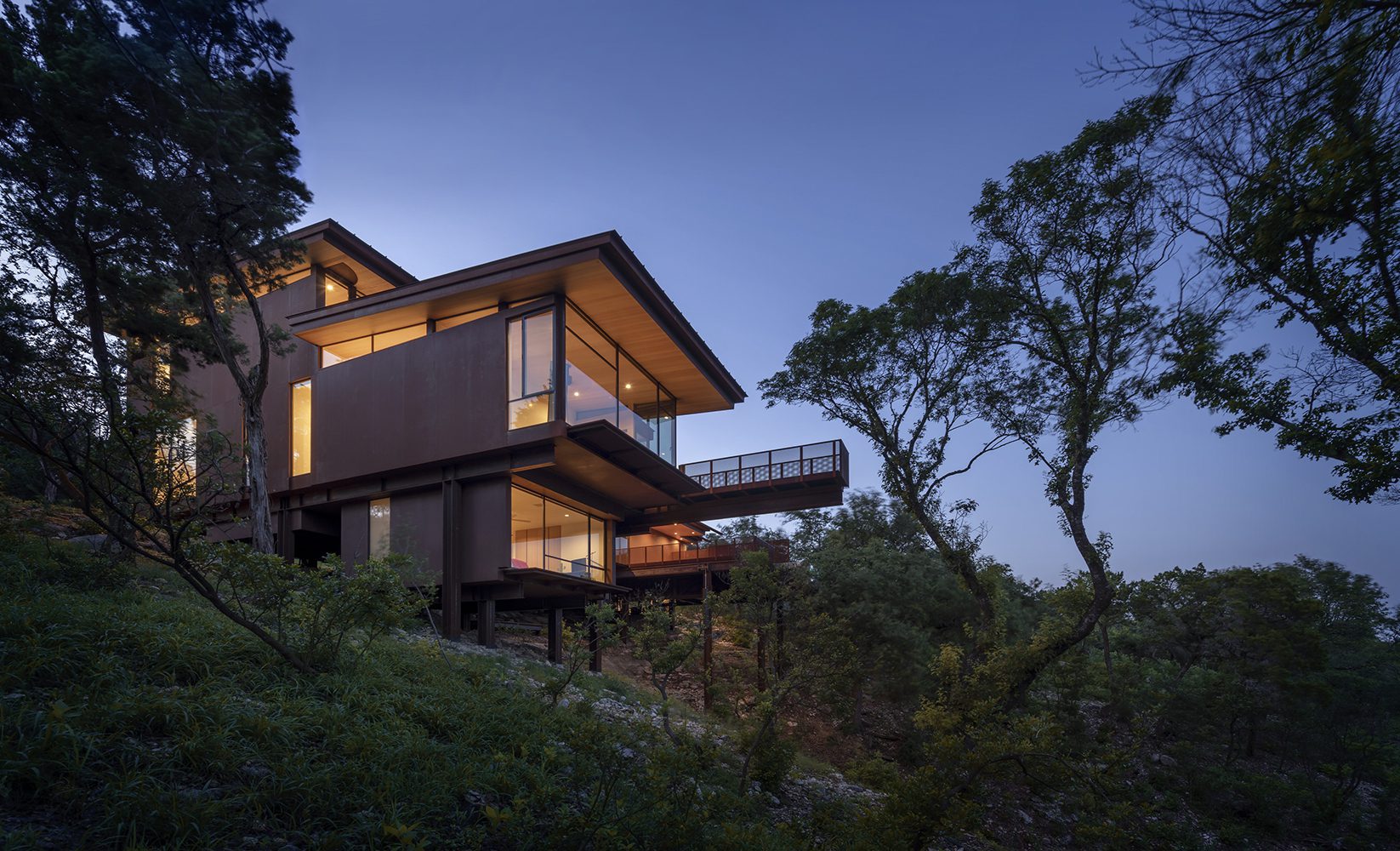
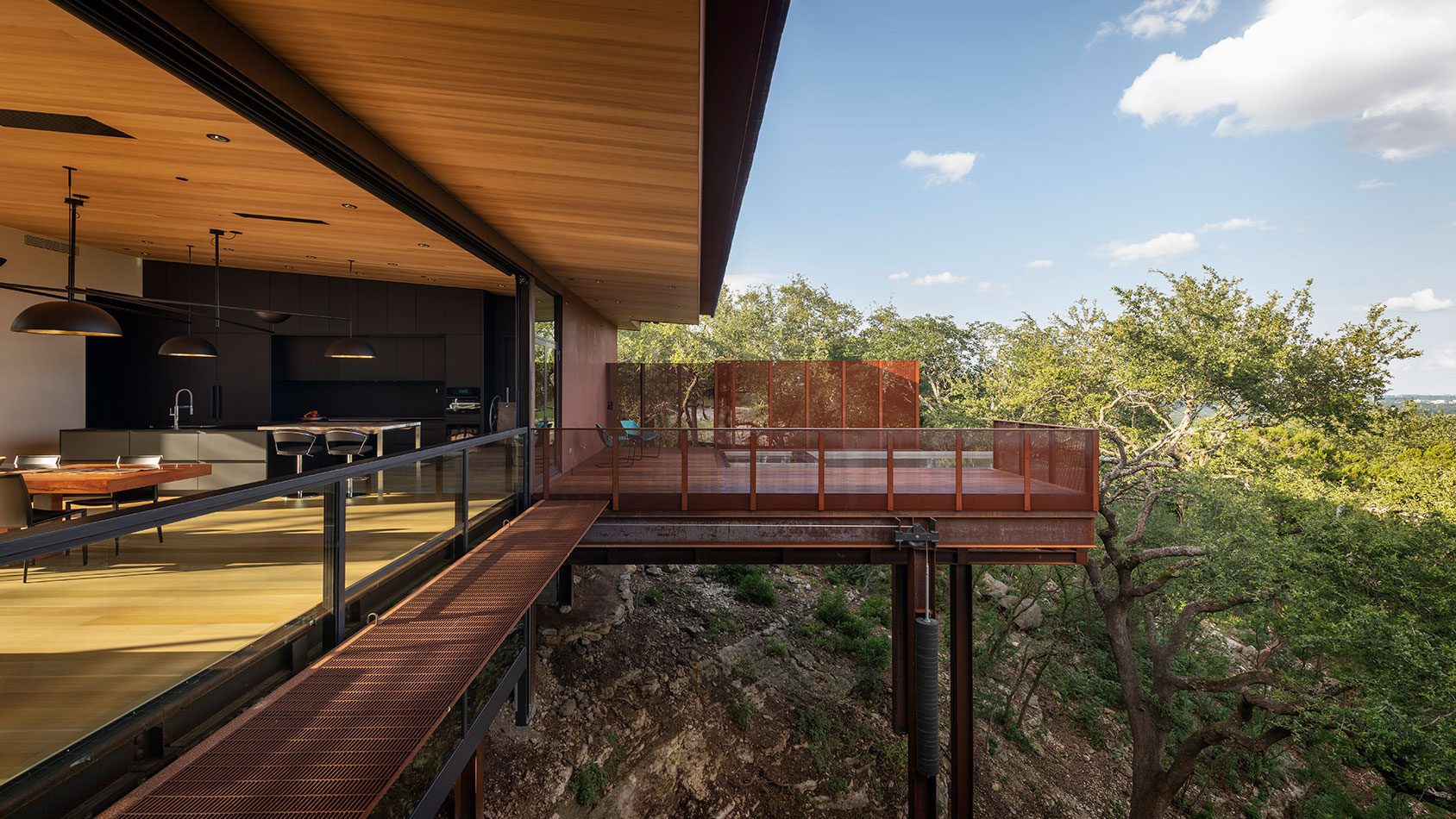
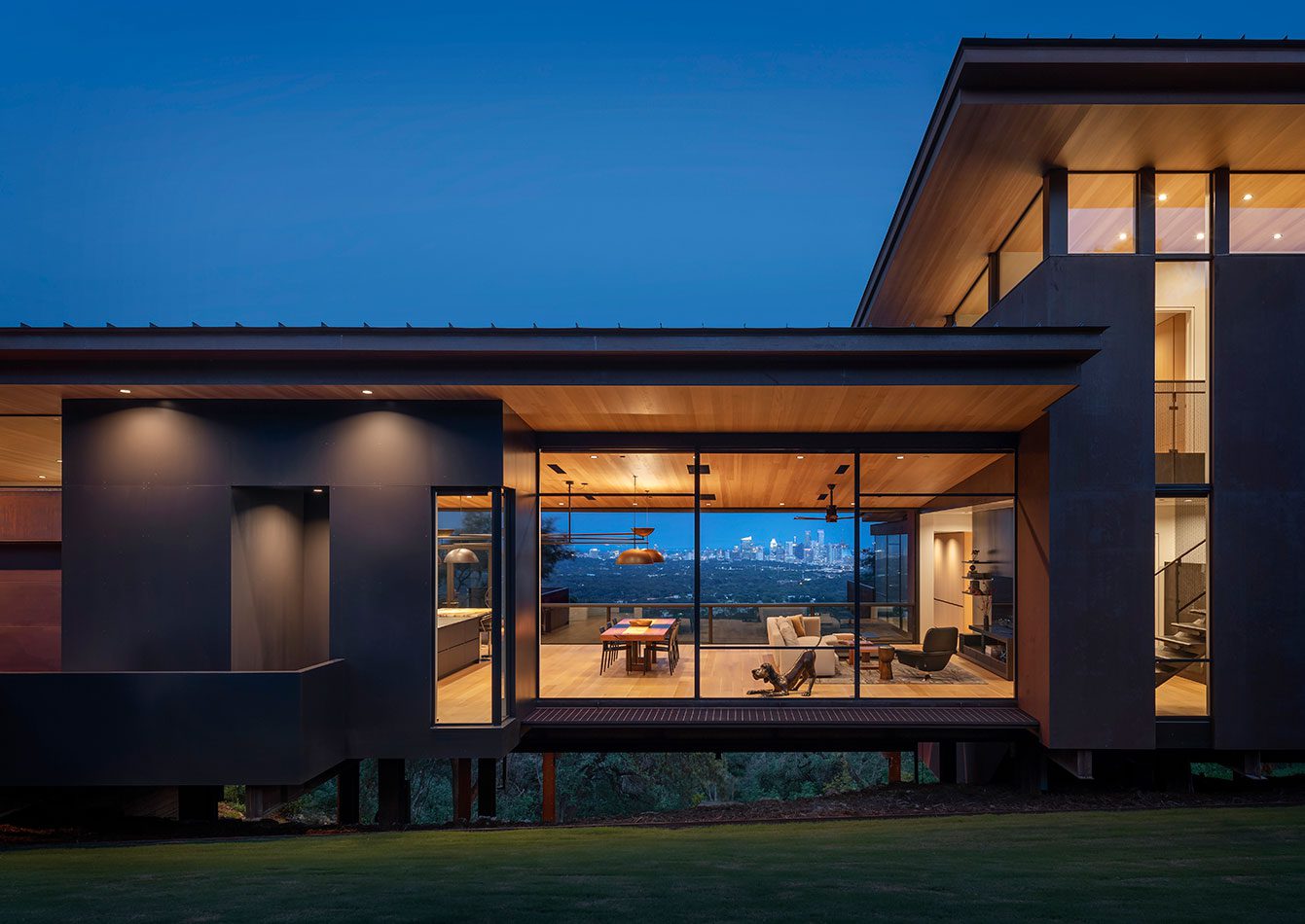
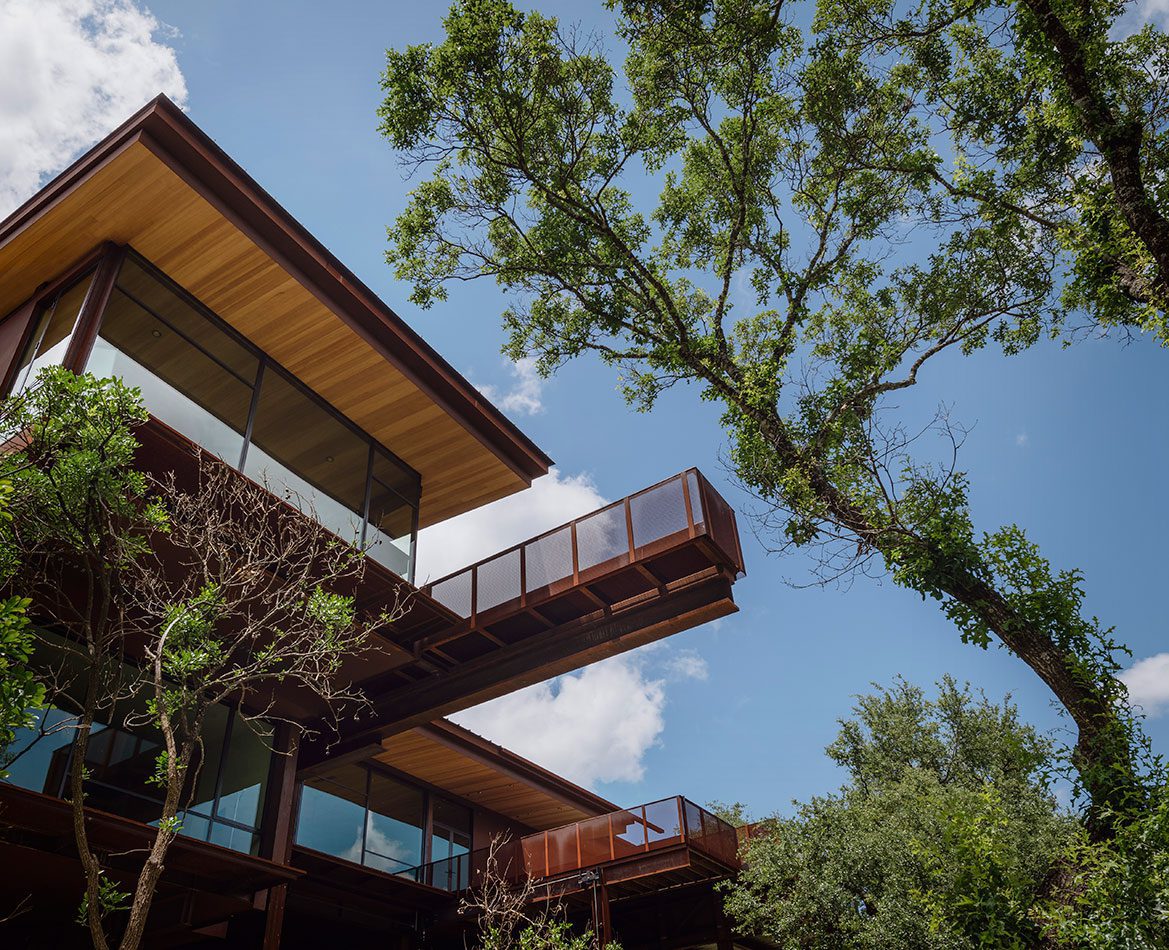
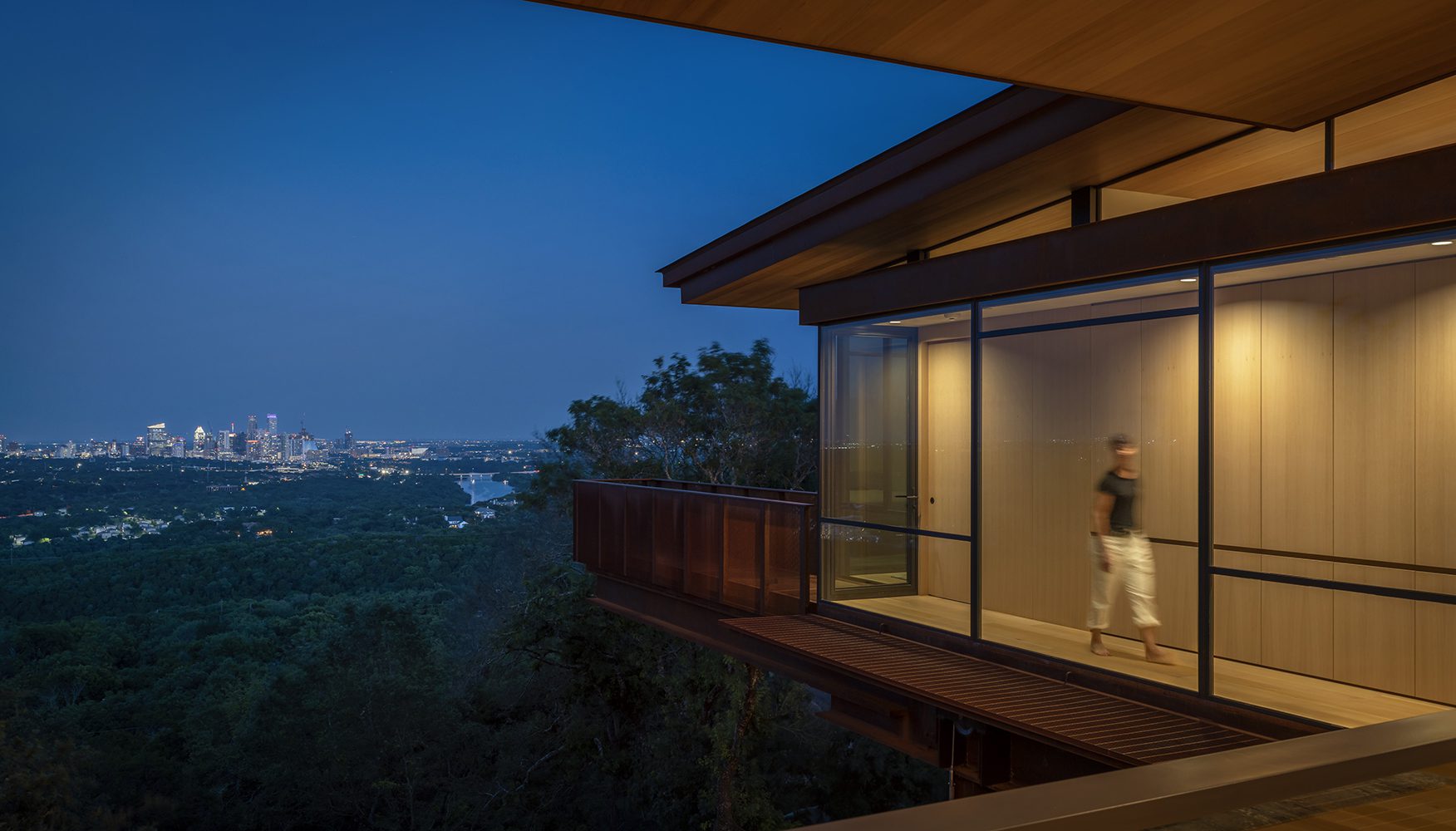
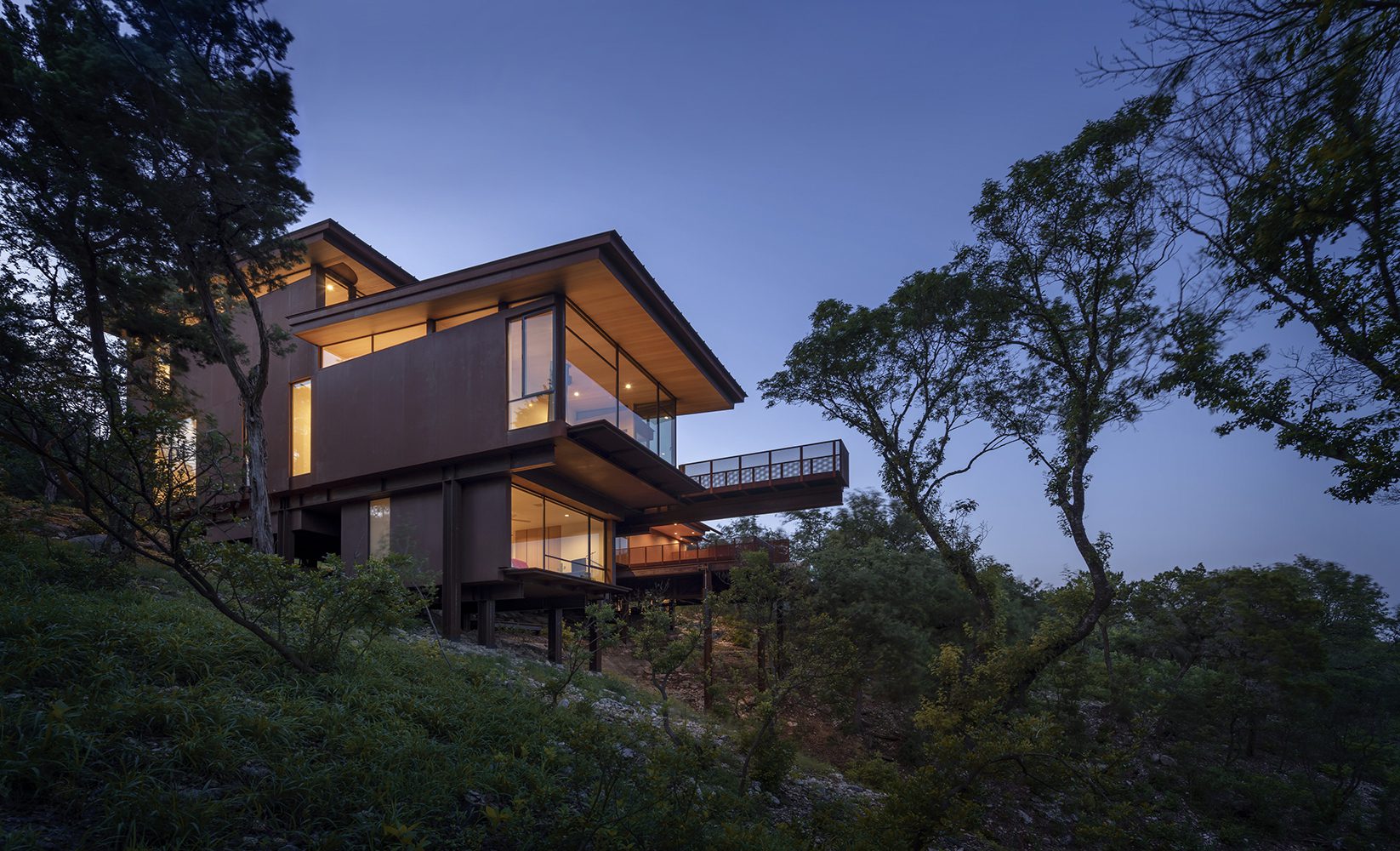
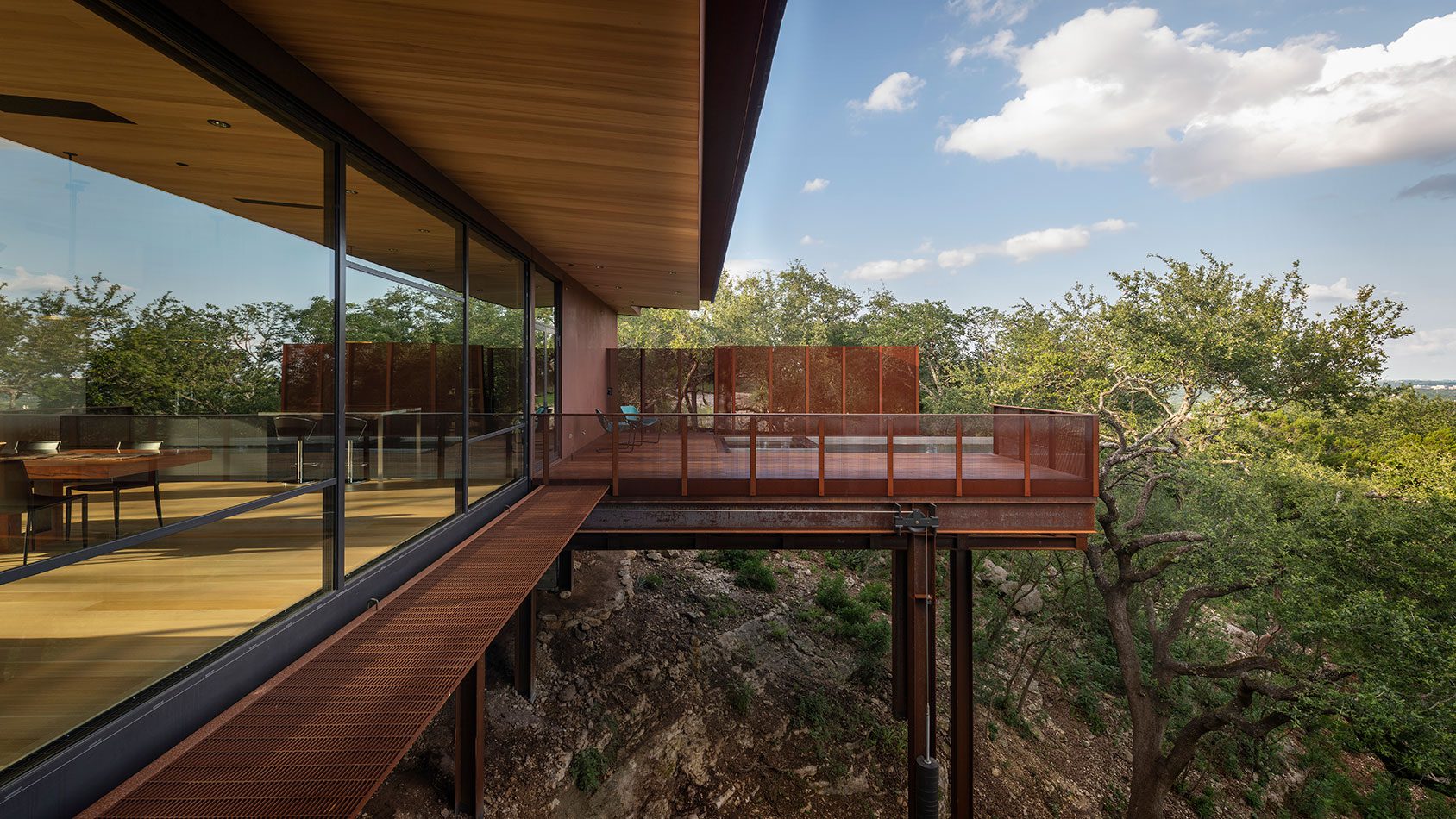
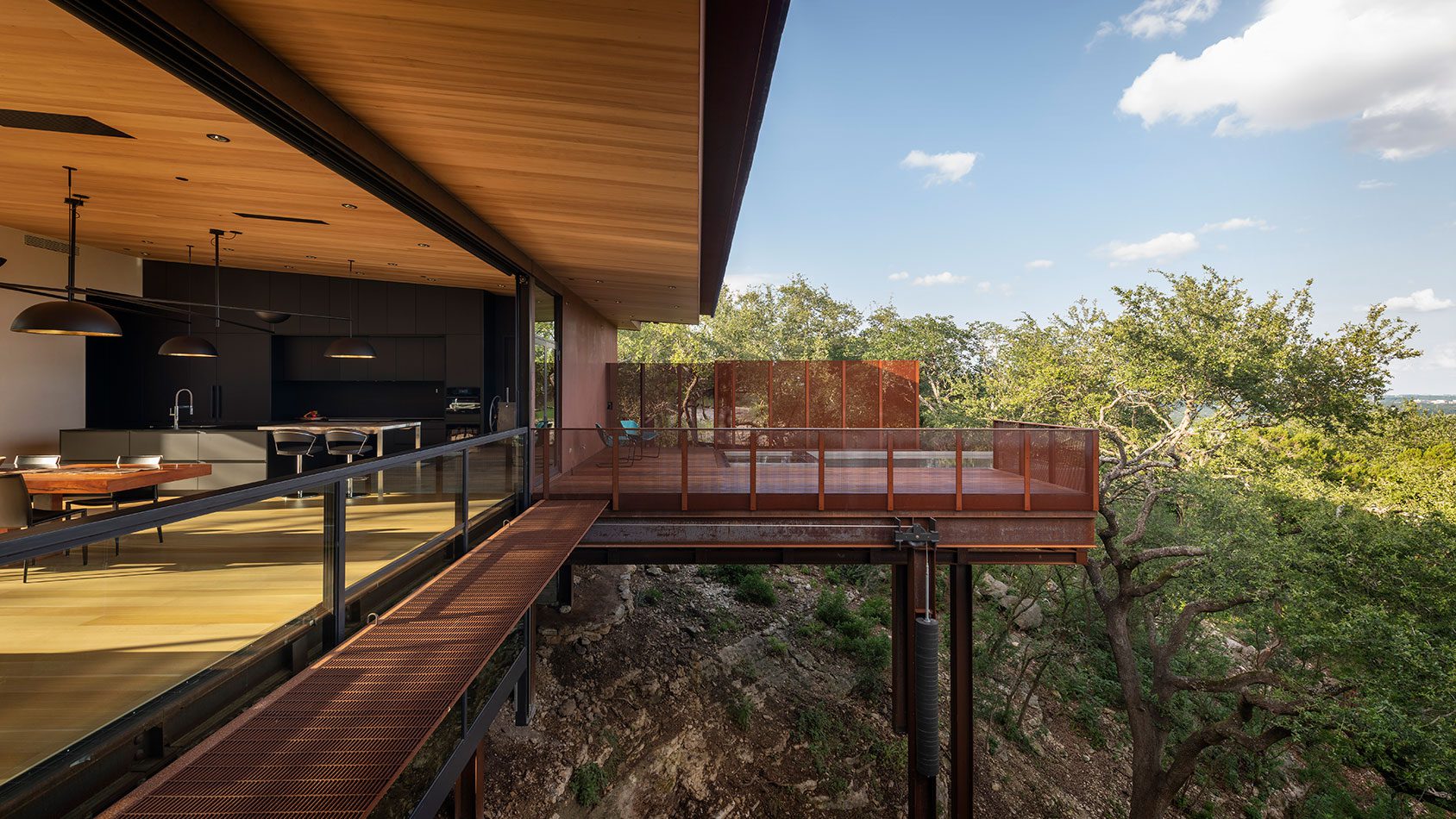
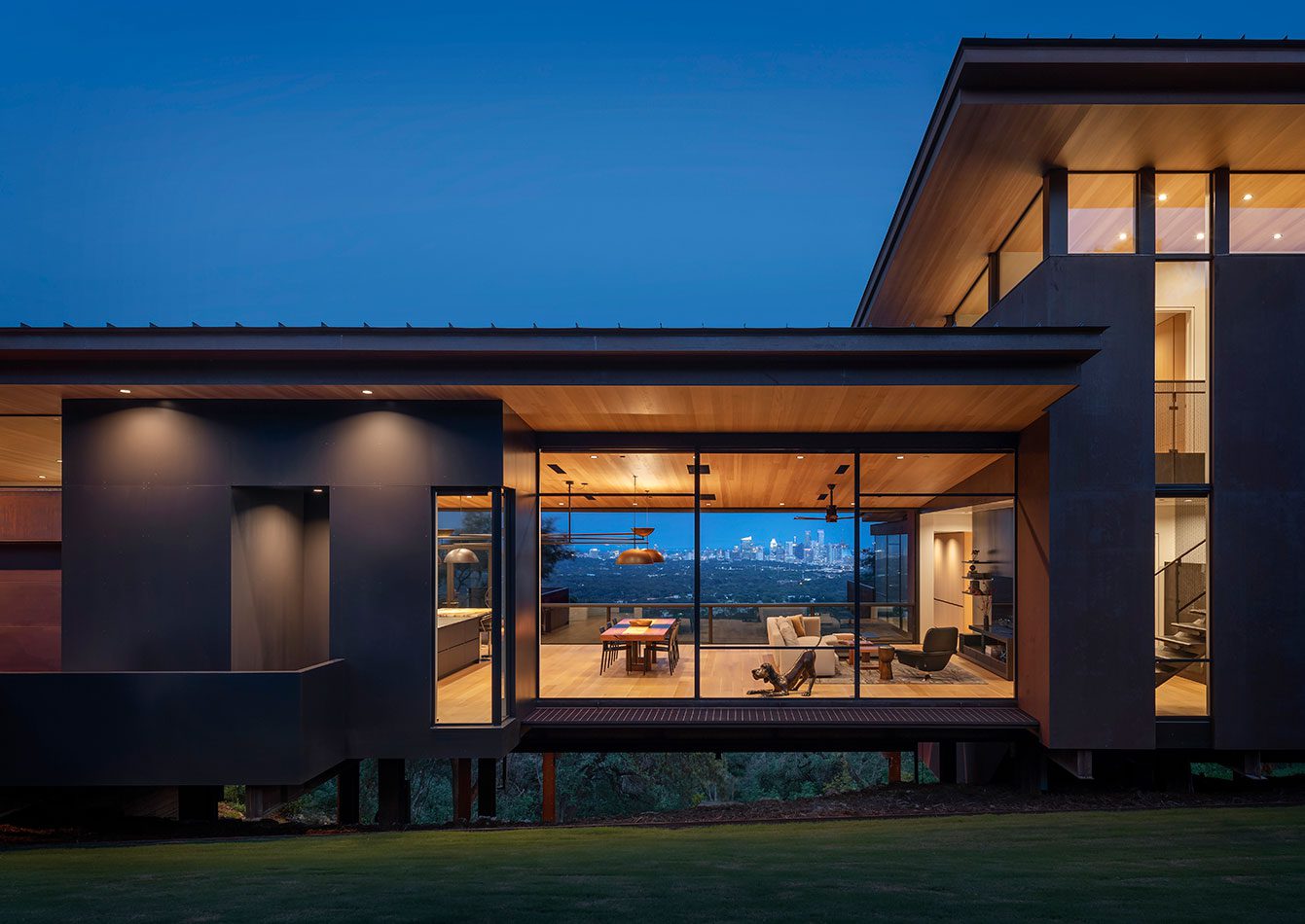
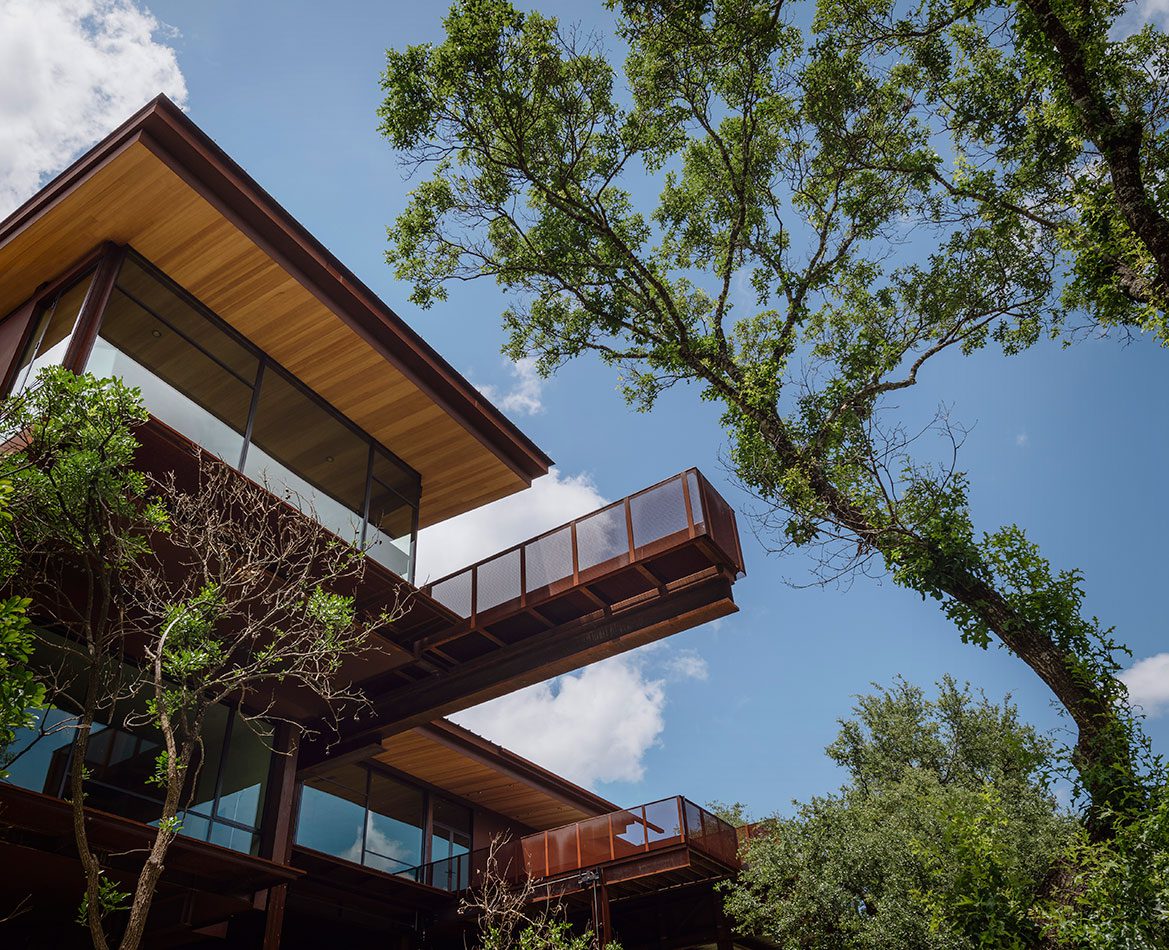
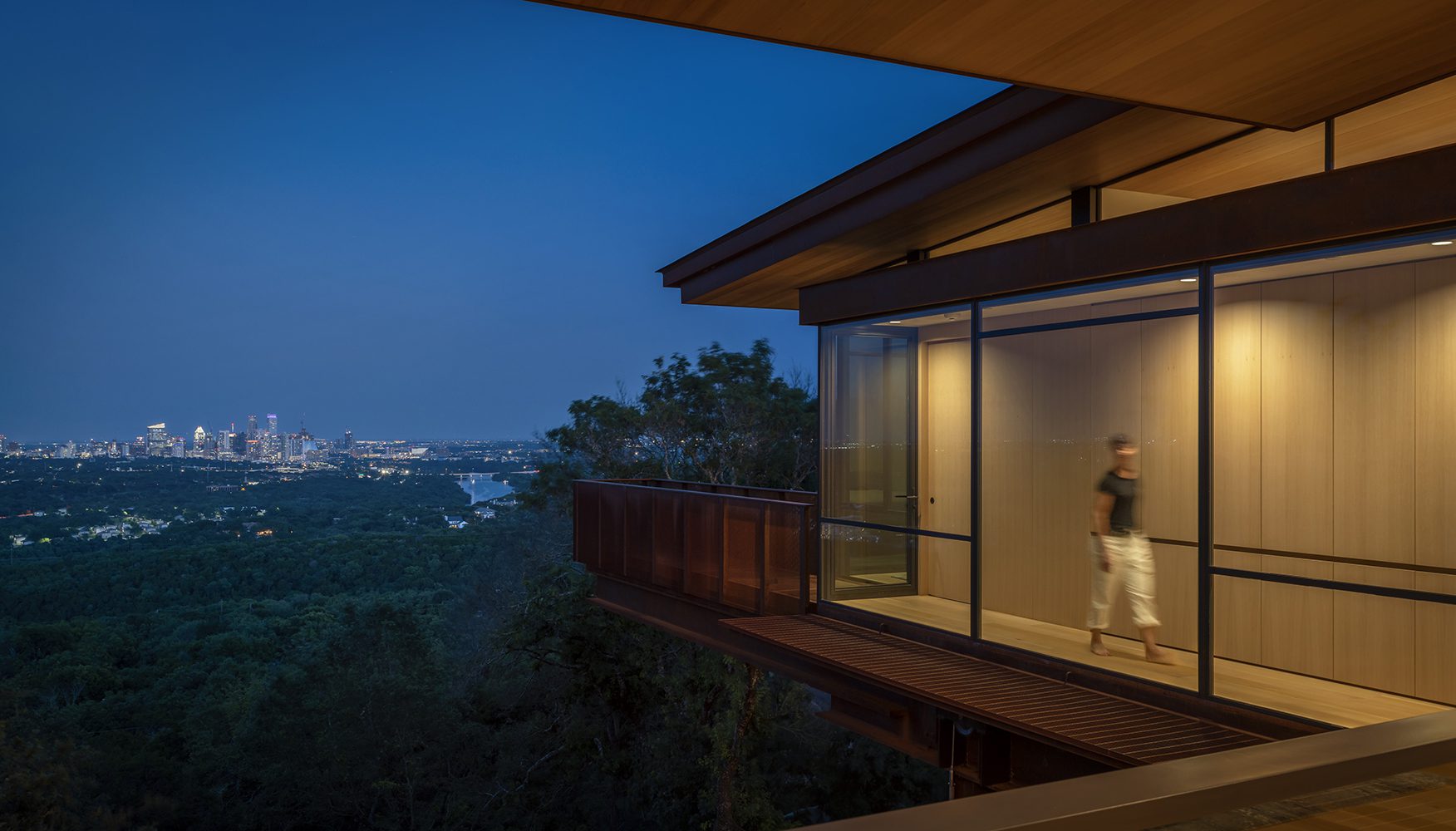
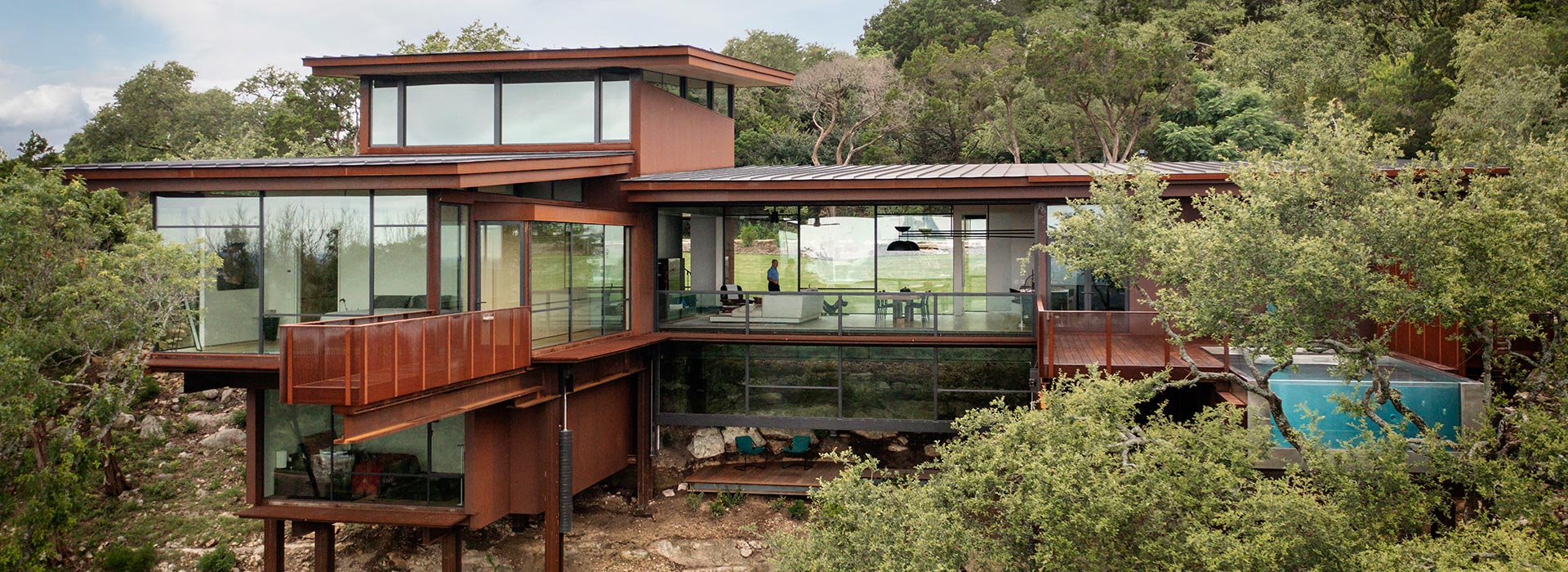
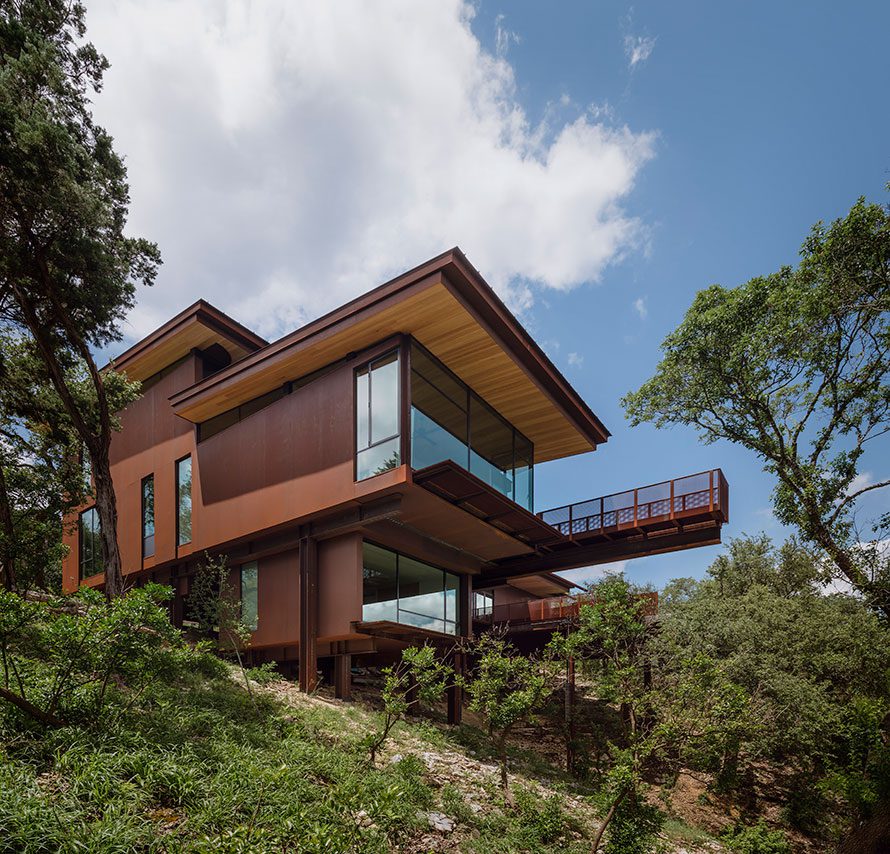
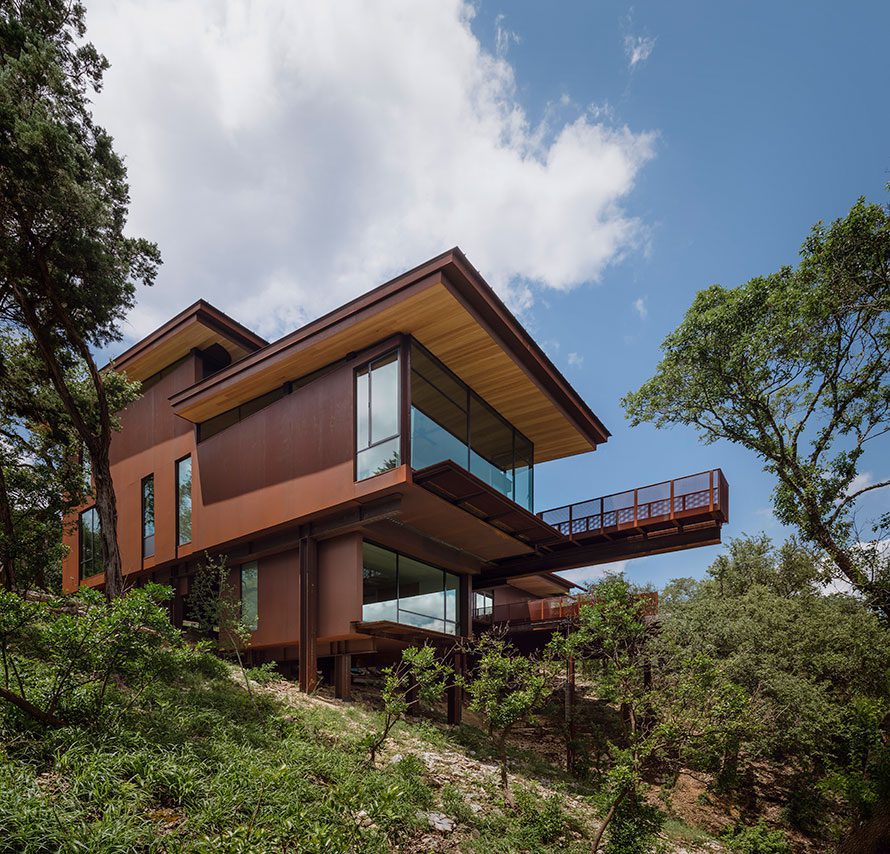
Perched above a steep ravine on the outskirts of Austin, the Caddy Shack Residence is a radical exercise in architectural restraint and engineering audacity. Designed by Olson Kundig and built by Jon Luce, the home defies conventional foundations—floating instead on a moment frame supported by deep pylons—allowing the landscape, drainage, and geology beneath to remain untouched. In that way, the house does not sit on the land; it hovers within it. This motional effect is also present in an extraordinary feature within the residence—a kinetic steel window system that transforms the structure into experience. It is the result of an exceptional collaboration between architect, builder, and fenestration partner.
Building the Unbuildable
A former professional golfer was looking for a spectacular site for his new home and had a particular neighborhood in mind on the outskirts of Austin, Texas.
The golfer approached expert builder Jon Luce for help, and Jon quickly found a site with unbelievable views of downtown. However, there were problems.
“The topography was daunting,” Luce said, “The site was basically just a rocky slope at a 40-50-degree grade. I knew it had already been considered unbuildable. Added to that was the fact that the property essentially acted as a natural water channel to drain the hillside.”
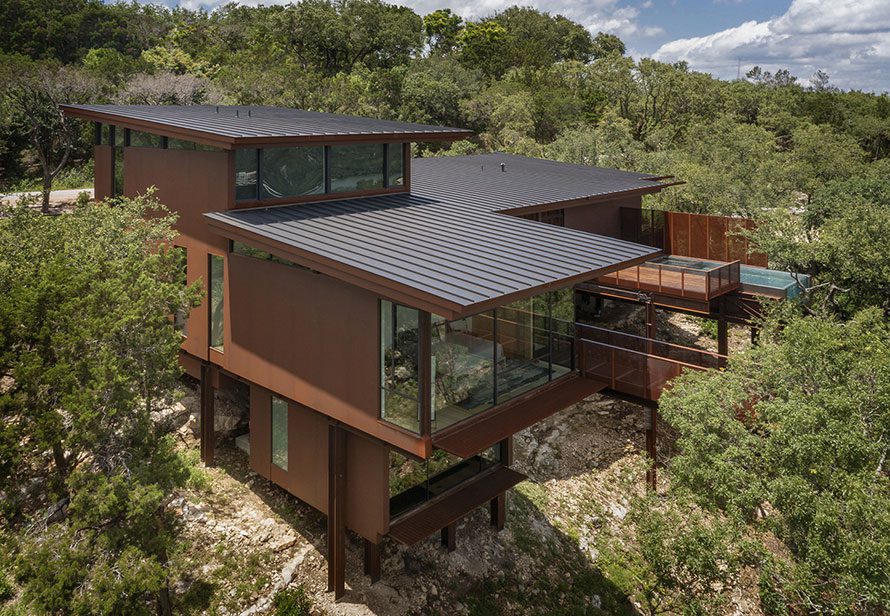
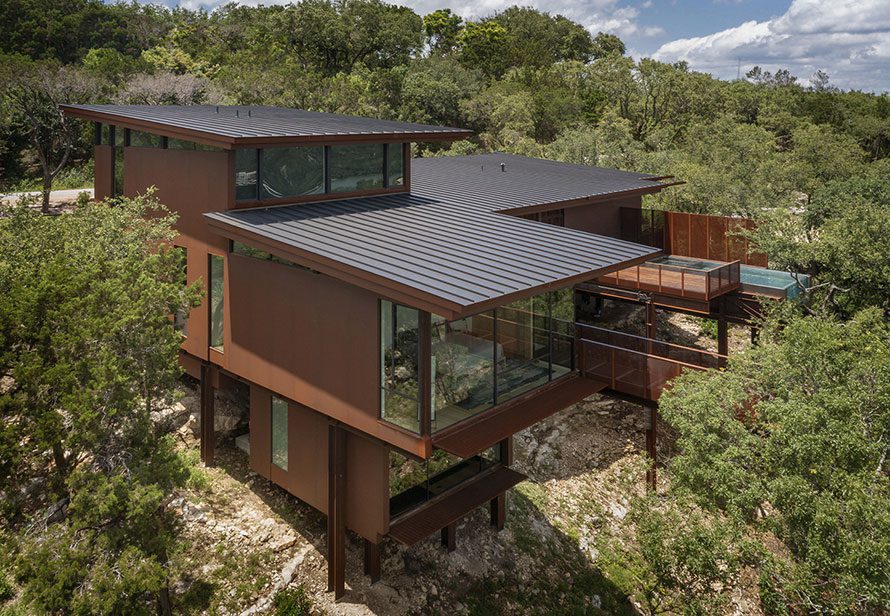
Luce was aware that previous owners of the land had hired architects to design a home there, but without success. Still, he persisted. When he showed the site to the client, the golfer was thrilled about the location, but immediately asked, “Who would design something that could actually be built on this site?”
Luce did not hesitate. “Tom Kundig.”
A House Without Foundation
Before long, Tom Kundig, owner and design principal of Olson Kundig in Seattle, Washington, was walking the site with Jon Luce and the client. Within moments, Tom said to them, “I see what we can do here. How would you feel about a house with no foundation?”
“How would you feel about a house with no foundation?”
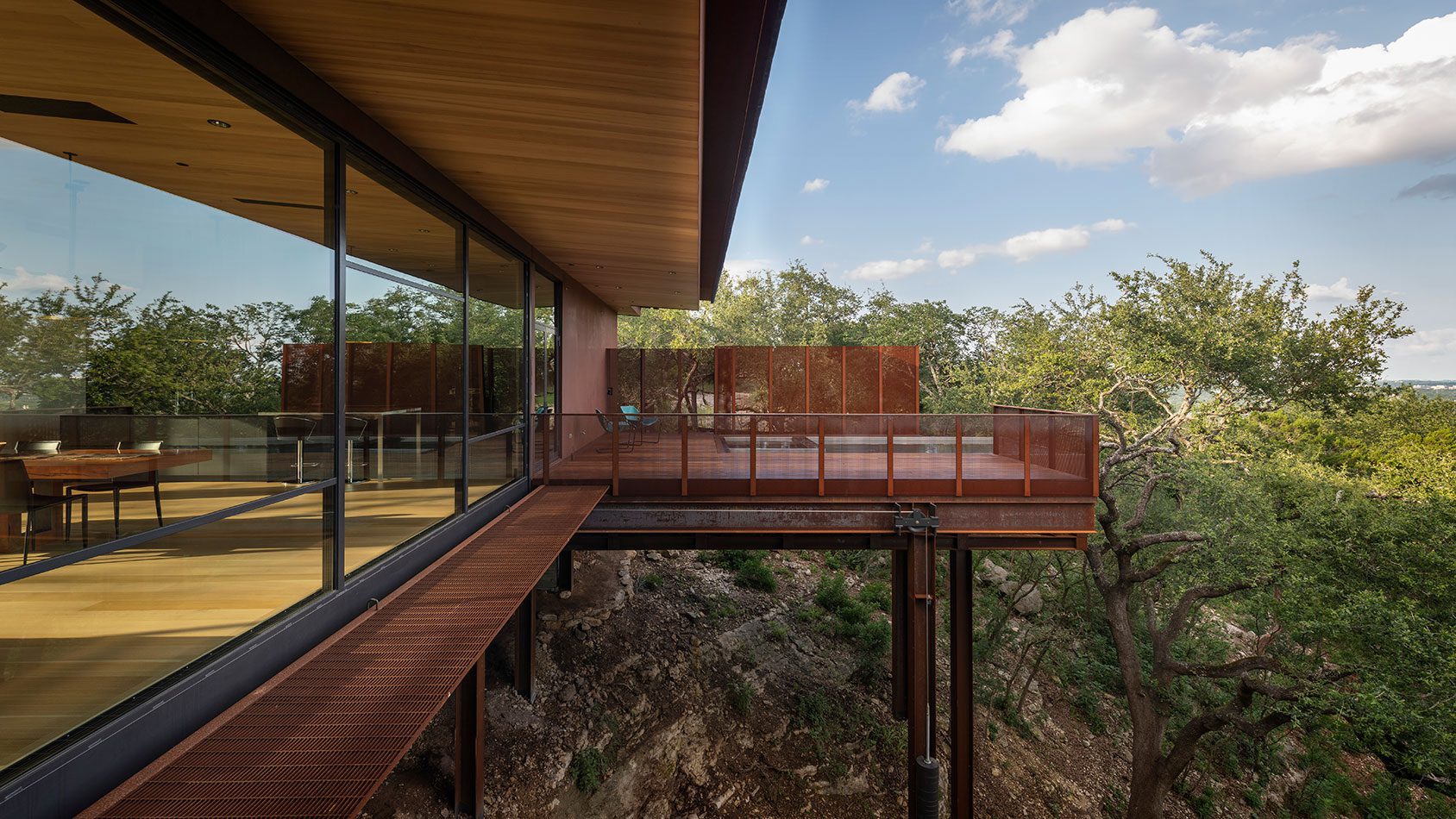
The resulting architecture was a moment frame anchored by twenty-five-foot pylons. Between the frame, a suspended bridge would form the floor and base of the house. According to Luce, “Nature was left undamaged and water drainage was not interrupted, because the footprint floated above the land itself.”
Luce recalled the interaction with city planners and engineers: “They toured the site and then granted a rare height variance exception, recognizing the unique accomplishment the design would deliver.”
Fenestration as a Structural Discipline
Early on, Luce and Kundig discussed the critical element of fenestration. The moment frame posed certain challenges since, according to design, it allowed for minimal structural movement, not unlike what is considered with seismic engineering.
“I talked to the Olson Kundig team,” Luce said, “about how the fenestration needed to be designed and engineered to fit and function within the flexible moment frame. That’s how Dynamic was introduced to the project. We knew they were crazy enough to collaborate with us, and capable enough to figure out what it would take.”
“We knew they were crazy enough to collaborate with us, and capable enough to figure out what it would take.”
Signature Feature: A Guillotine Window Wall
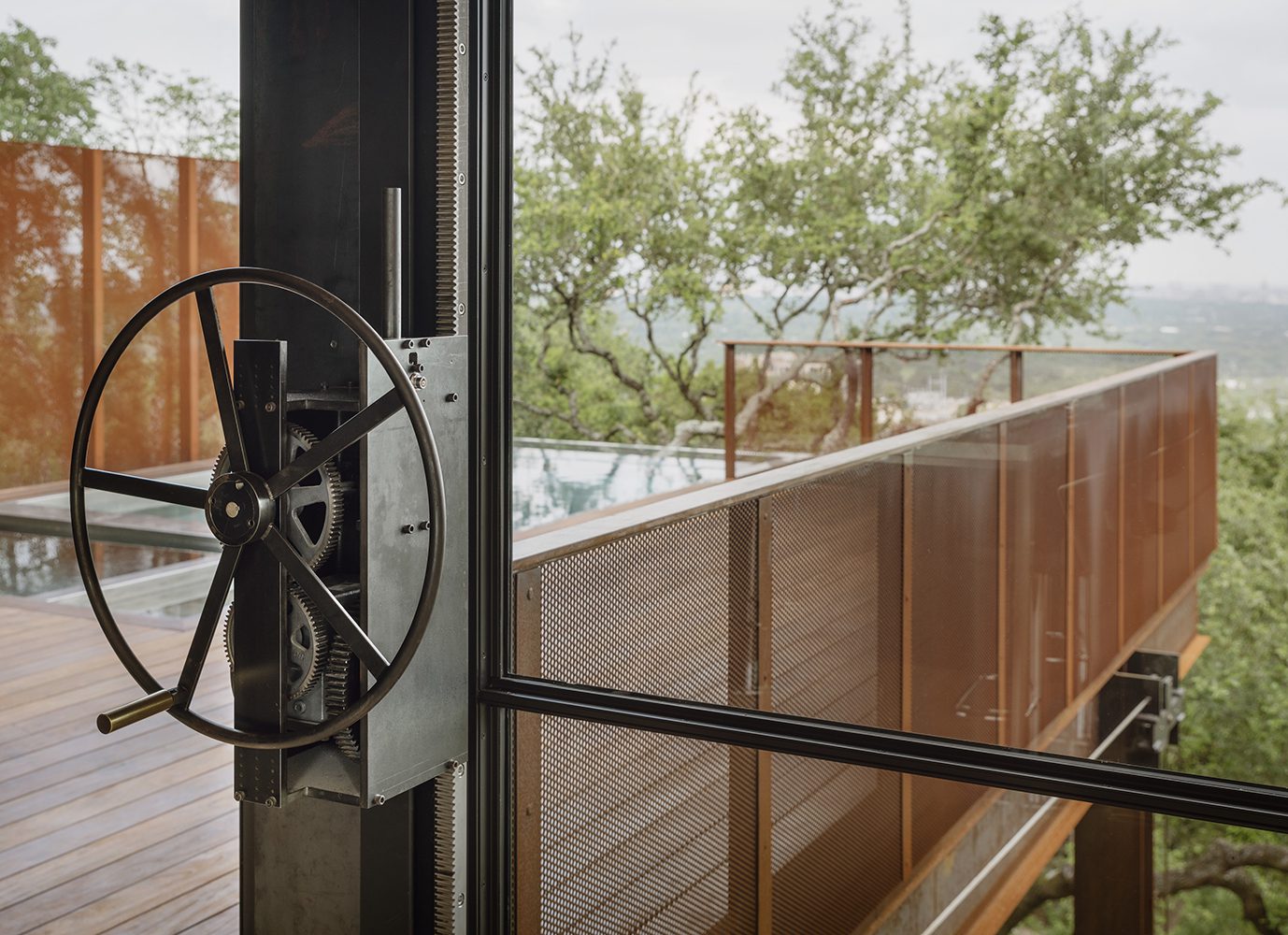
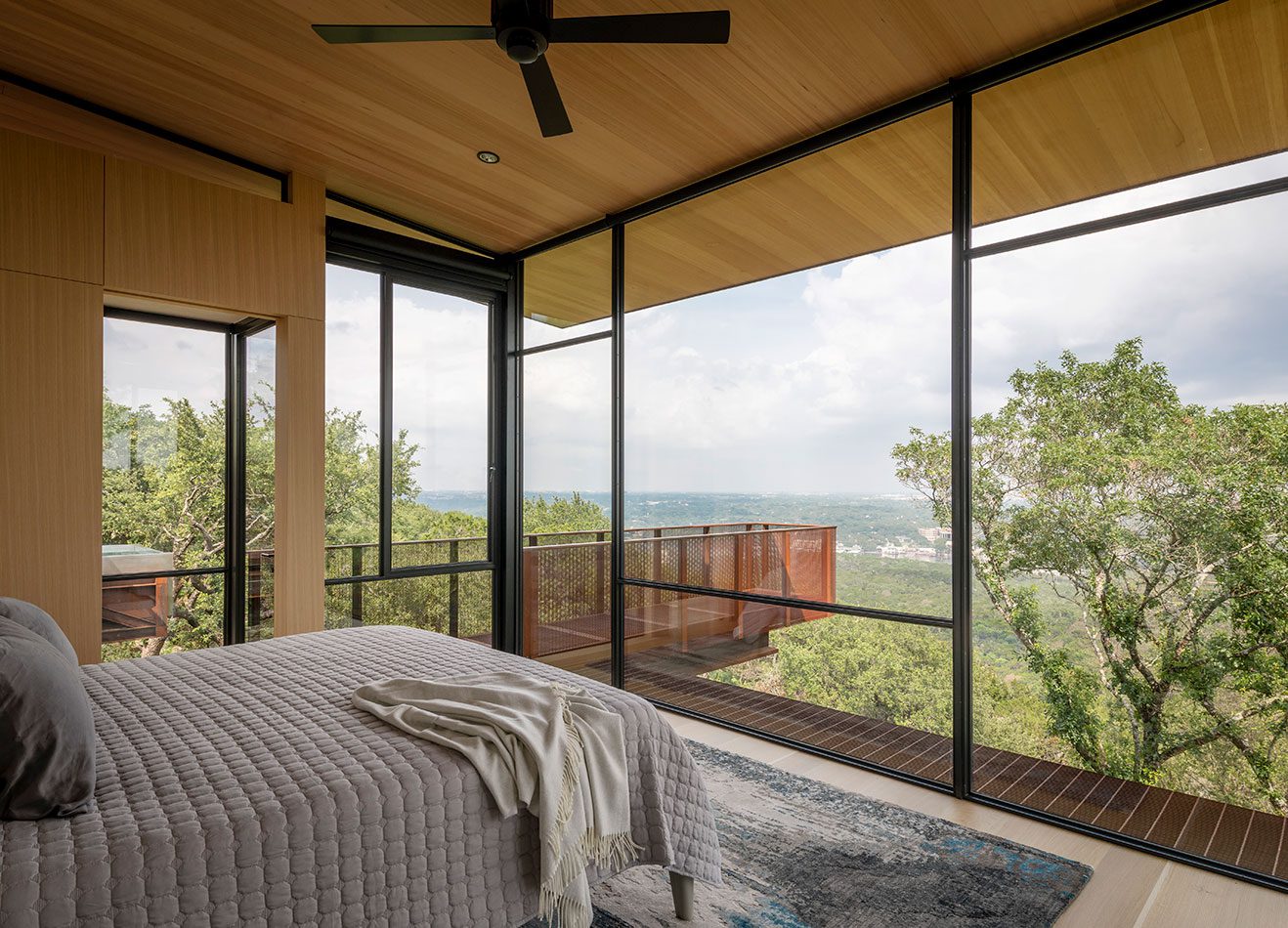
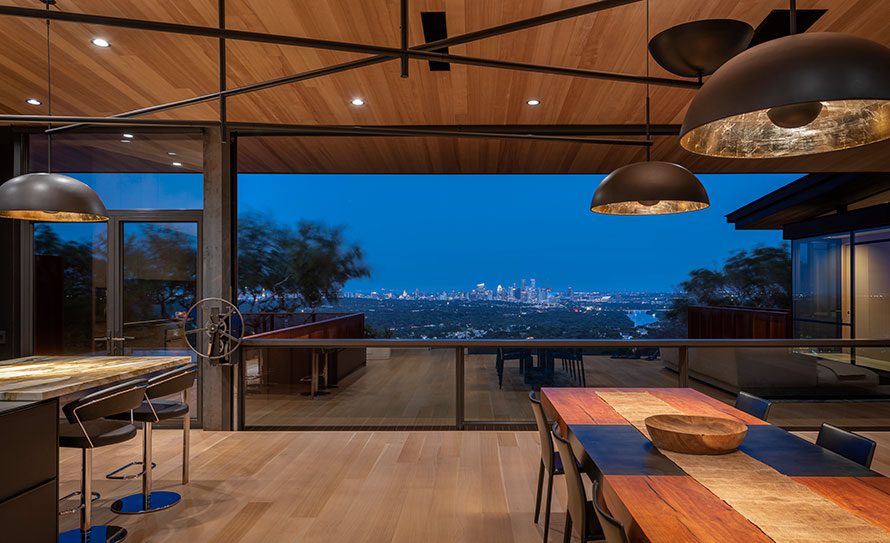
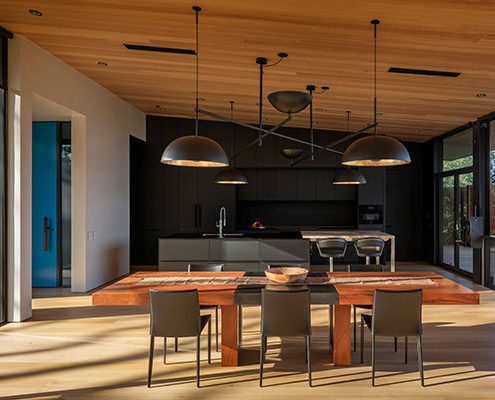
One of the most daring achievements in the house is a kinetic guillotine window wall that features prominently in the expansive main living space. Made of handcrafted thermally broken steel, the floor-to-ceiling residential storefront windows allow residents to take in the stunning view.
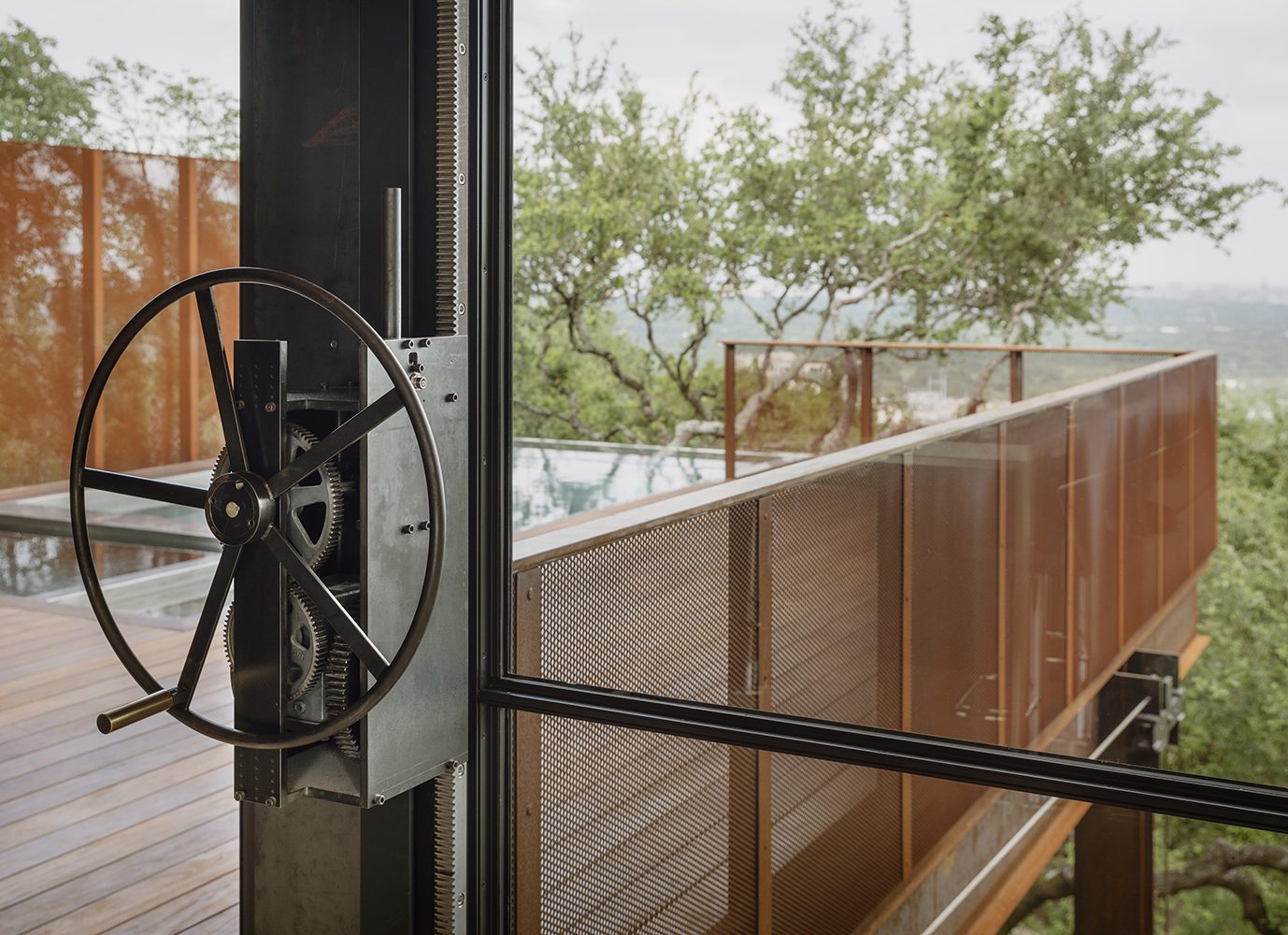
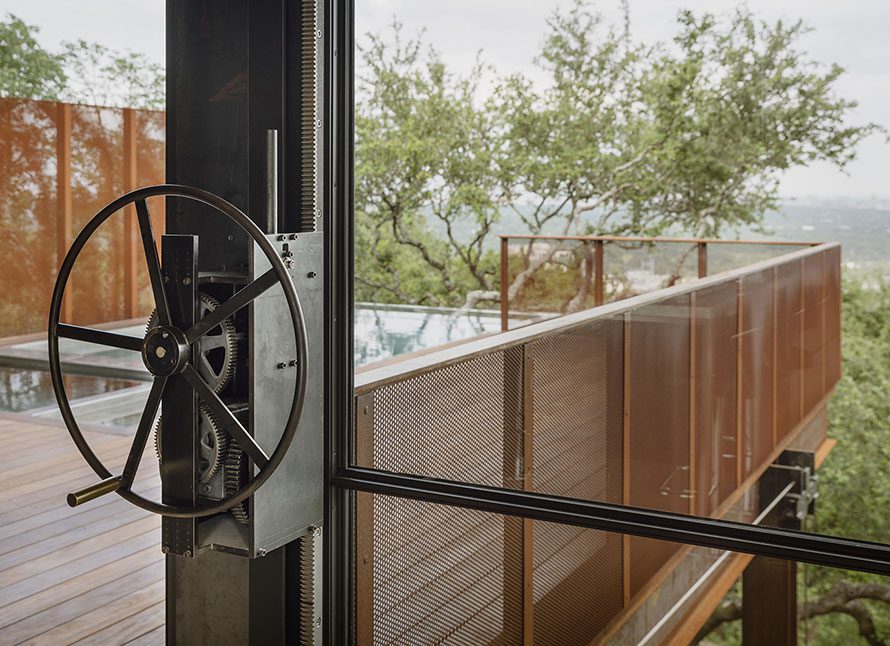
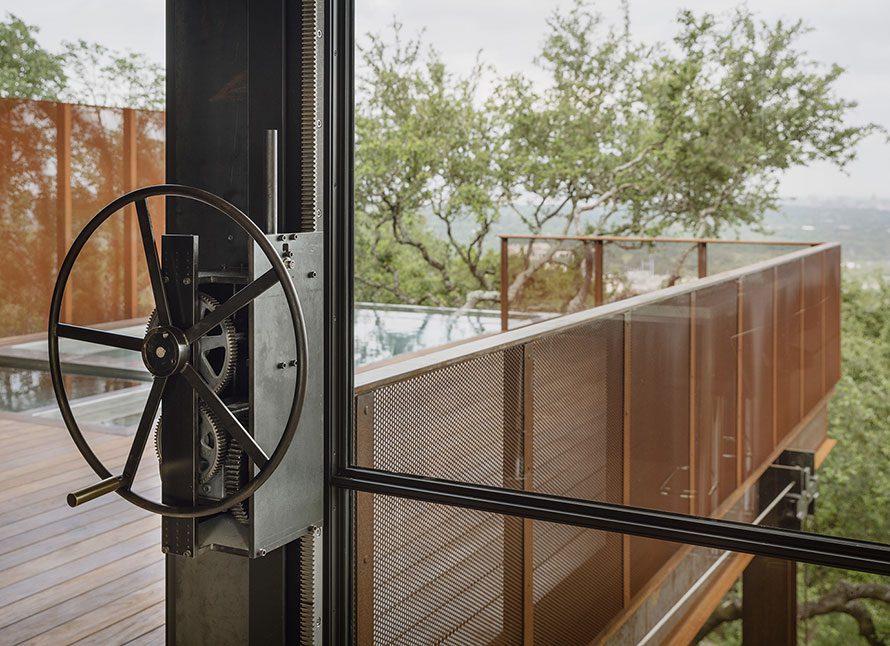
However, the more amazing aspect of the fenestration is experienced when, by way of a hand-operated wheel and exposed counterweights, the entire window wall to is able to partially lower and become a guardrail—an original kinetic element that is characteristic of Kundig and truly remarkable.
Material Language: Grit Meets Precision
Overall, the design of Caddy Shack speaks the language of both grit and grace. The home’s palette is intentionally restrained:
- Exterior: Weathering steel that echoes the arid hillside
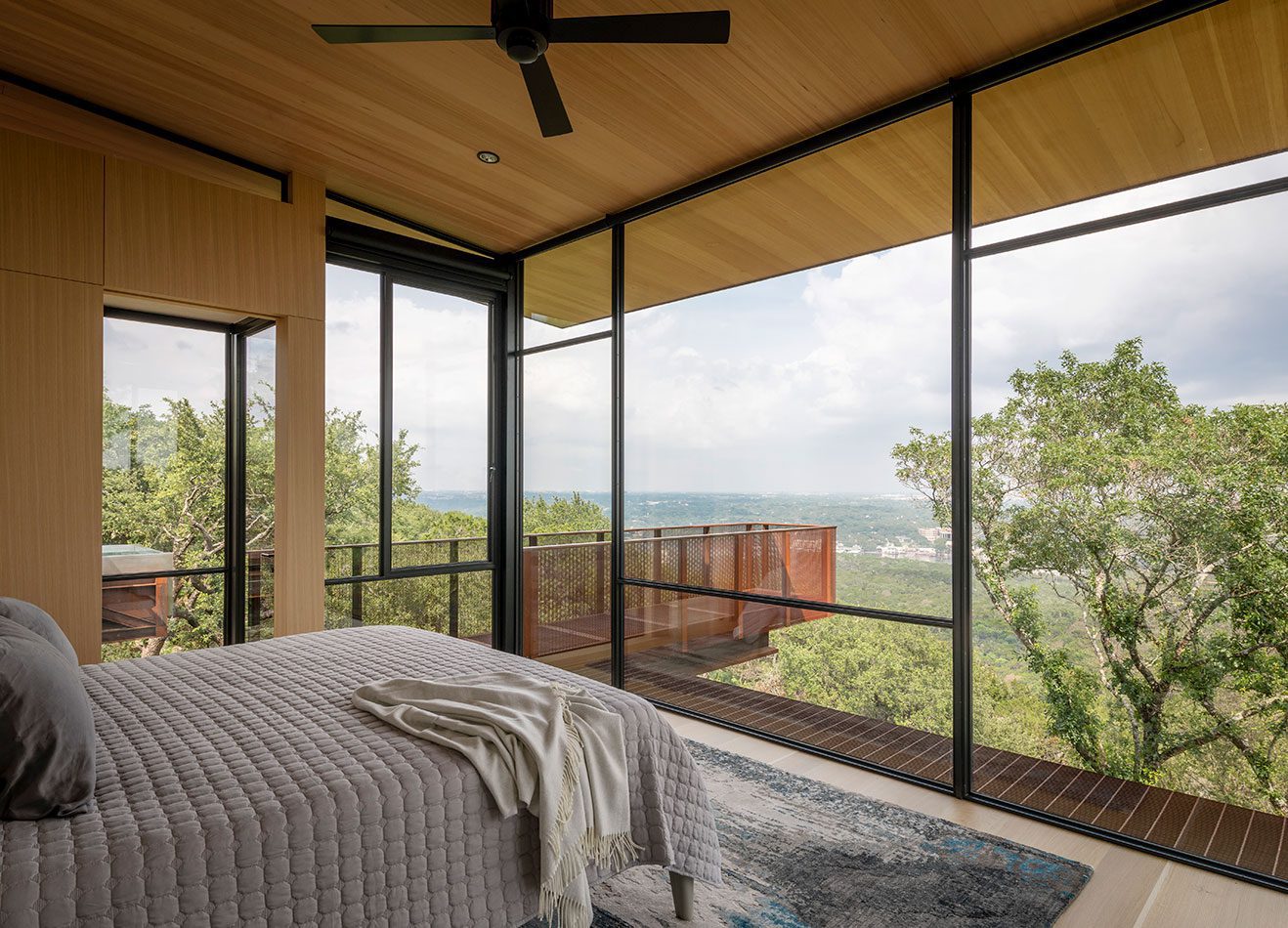
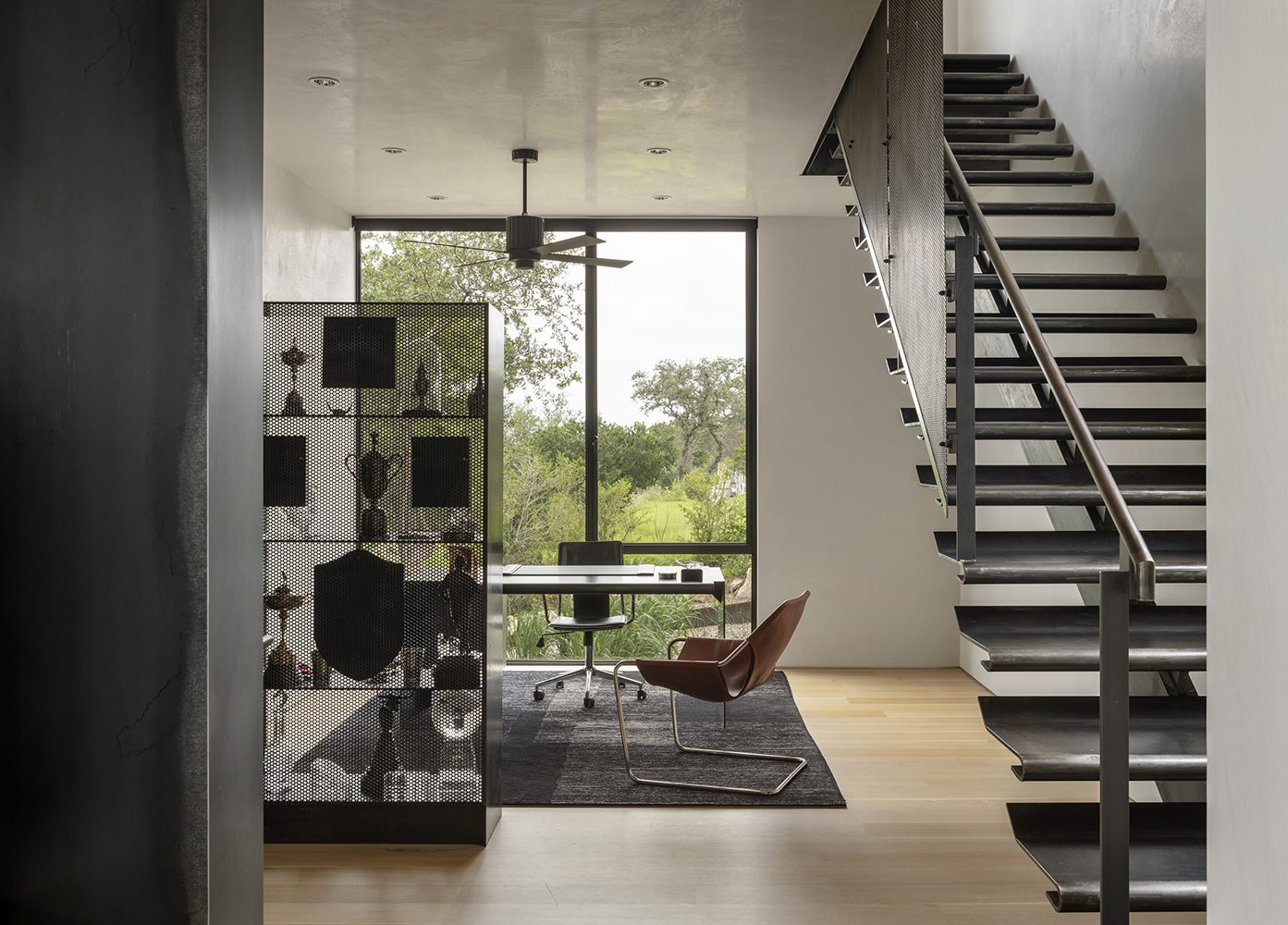
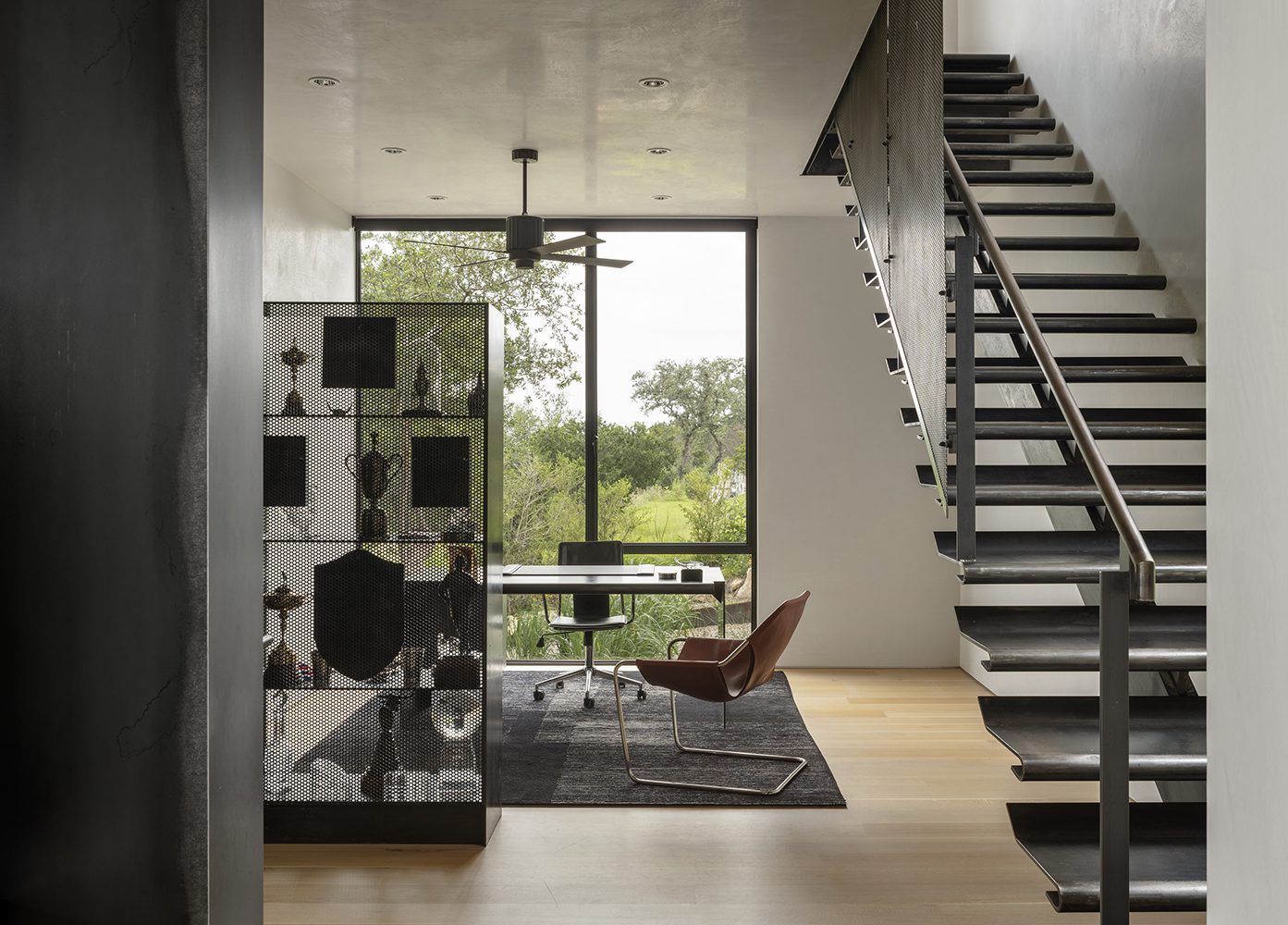
- Interior: Warm wood floors and ceilings, offset by blackened steel
- Fenestration: Purposeful, minimal, and structurally expressive
Additional moments of precision include:
- Clerestory windows washing light into the garage workspace
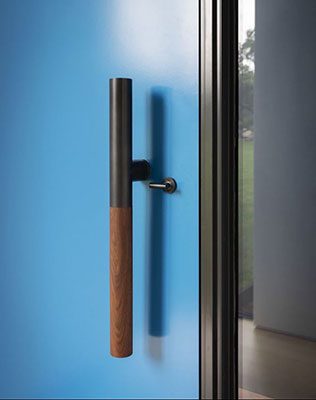
- A custom pivot entry door, finished in automotive-grade blue to match the client’s classic car
- A narrow steel walkway extending over the ravine to the primary suite—equal parts calm and vertigo
Why This Project Matters
More than a striking residence, Caddy Shack is a case study in:
- Designing with topography, not against it
- Treating fenestration as architectural infrastructure
- Using kinetic elements to deepen spatial experience
- Proving that design integrity and buildability are not opposites
A Model for Architectural Partnership: Exploring Together
Dynamic cherishes partnerships with architects like Olson Kundig and builders like Jon Luce. Caddy Shack provides generous opportunity to explore the outer limits of design and to push familiar materials and strategies to their extremes.
When Tom Kundig spoke about Caddy Shack on designboom.com, he said,
“The heart of this project is the client. He was able to look beyond a challenging site and see that we had an opportunity to make something extraordinary. That sense of adventure and risk-taking really informed the spirit of the home. We were able to very surgically insert the house into the ravine, leaving the landscape in its natural state as much as possible.”
Tom Kundig, Design Principal, Olson Kundig
For those at Dynamic who worked on this project, we felt privileged to collaborate with an amazing team of professionals. Caddy Shack showed us what a visionary architect, a solutions-oriented builder, and a very brave homeowner can accomplish together. We stand in awe.
Media: Design Boom.
Why do Architects Attempt Kinetic Systems?
Architects specify kinetic architecture to solve three core design objectives:
- Spatial Transformation: eliminating the traditional boundary between inside and outside
- Environmental Modulation: control of nature ventilation, daylighting, solar gain, and acoustic exposure
- Experiential Architecture: creating sensory connections to architecture