


What’s the Deal with Distortion in Architectural Glass?
Pursuing Design Purity in an Imperfect Medium
Originally published October 2021. Updated December 2025.
The Question Behind the Reflection
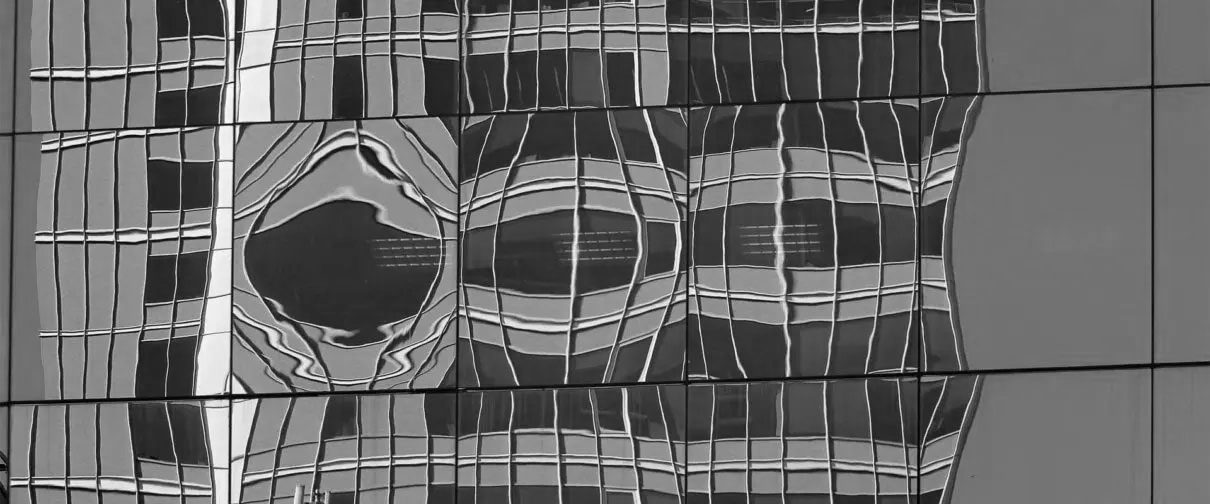
Every architect who has stood before a newly completed elevation knows the moment: the façade gleams, light dances across the glass — and then the reflection ripples ever so slightly. Distortion. That subtle deviation between intent and reality.
As fenestration grows in both scale and ambition, distortion has become a recurring conversation in high-performance design reviews. It’s not just a technical phenomenon; it’s an aesthetic and philosophical one. And as glass technology advances — thinner sightlines, higher-performance coatings, and more expressive surface treatments — distortion becomes increasingly visible.
The question, then, is not why it happens, but what it means for architectural integrity, craftsmanship, and design truth.
1. Is Distortion Inherent in Glass?
Architectural glass is never perfectly flat. The very processes that make it safe and structurally resilient — particularly heat treatment — introduce microscopic undulations into its surface.
Tempered glass, formed by heating to approximately 1200°F and rapidly cooling, gains immense strength but develops subtle roller-wave distortion: tiny, rhythmic variations created as softened glass moves across ceramic rollers. These waves are often imperceptible — until reflection amplifies them.
By contrast, annealed glass appears visually calmer but lacks the safety and performance required in today’s large-format, luxury applications.
In short: perfection in glass is a myth; precision in managing imperfection is the art.
2. Why Are We Seeing It More Now?
Architects aren’t more critical — glass is simply more revealing.
The rise of high-performance low-E coatings has transformed how façades interact with light. These coatings reflect both infrared energy and visible light, producing stronger mirror effects that highlight even minute surface variations.
In addition, as of 2025, the prevalence of triple-silver and fourth-surface coatings has made glass even more reflective. What once absorbed light now returns it with remarkable clarity — exposing every nuance of curvature and process.
Distortion isn’t new, yet visibility is.
3. What Can the Industry Control?
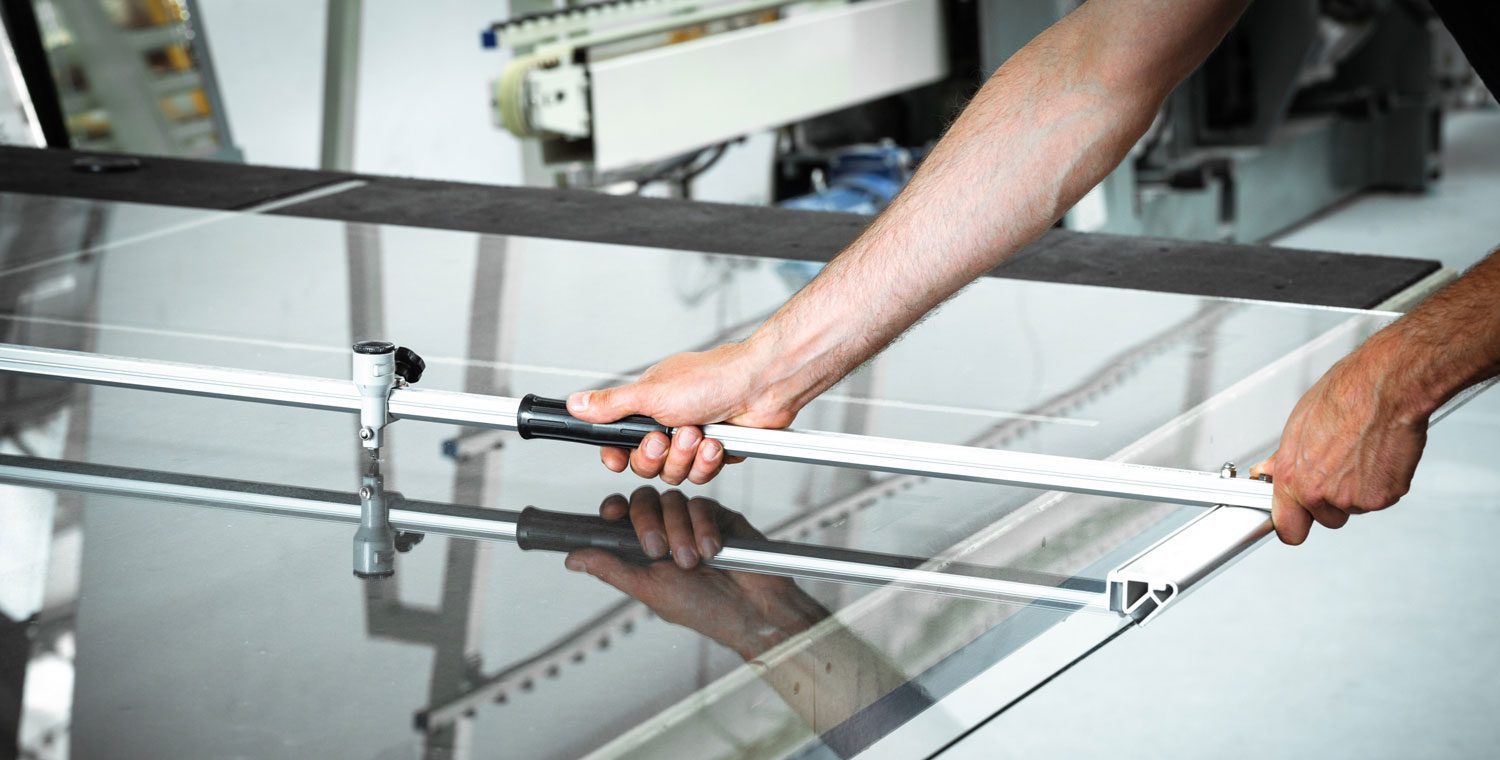
Leading fabricators continue to refine the tempering process, yet even the most advanced lines can only minimize — not eliminate — distortion.
Traditional Zebra Board testing remains the analogue benchmark, using alternating black-and-white stripes to reveal undulation. But today’s top-tier producers have moved toward precision digital systems like Osprey 9 and Trident, which employ AI-driven optical sensors to measure curvature in millidiopters — a unit borrowed from optical science and defined in American Society for Testing & Materials (ASTM C1651).
In ideal flat glass, optical distortion approaches 0 millidiopters (mD). For conventional fully-tempered architectural glass, the industry has often referenced a typical distortion tolerance of ± 300 mD. However, for premium architectural applications, modern fabrication and inspection systems increasingly allow tolerances under ±120 mD (or better for the majority of the lite) to achieve visual excellence.
It is noteworthy that neither ASTM C 1048 nor ASTM C 1651 impose a strict maximum mD number — rather, most distortion limits depend on glass thickness, size, coating, orientation, furnace processing, and project‐specific requirements.
At Dynamic, we engage early with Navigators, manufacturers, and our fabricator network to define an appropriate optical distortion target aligned with the architectural expectation.
Importantly, ASTM recognizes distortion as an inherent outcome of heat treatment. No standard dictates an upper limit for “acceptable” distortion — because it’s a product of physics, not negligence.
Glass can be engineered with mastery, but never absolute obedience.
4. Rethinking Expectation: Architectural Loyalty and the Reality of Light
At Dynamic Fenestration, we often approach distortion as part of the material narrative — a characteristic that reflects the dialogue between craft, light, and physics.
For an architect pursuing minimalist purity, distortion can feel disruptive. But when viewed through the lens of architectural loyalty — the commitment to realizing design intent through authentic fabrication — distortion becomes something to anticipate and design around.
Expectation alignment begins early:
- Design-assist collaboration integrates optical modeling and coating selection into schematic design.
- Mock-up testing under natural daylight helps visualize distortion and reflection in context.
- Simulation tools allow architects to “see” reflective behavior before fabrication.
When distortion becomes predictable, it becomes designable.
5. The Meaning of Imperfection
True luxury is no longer about flawlessness — it’s about intentionality.
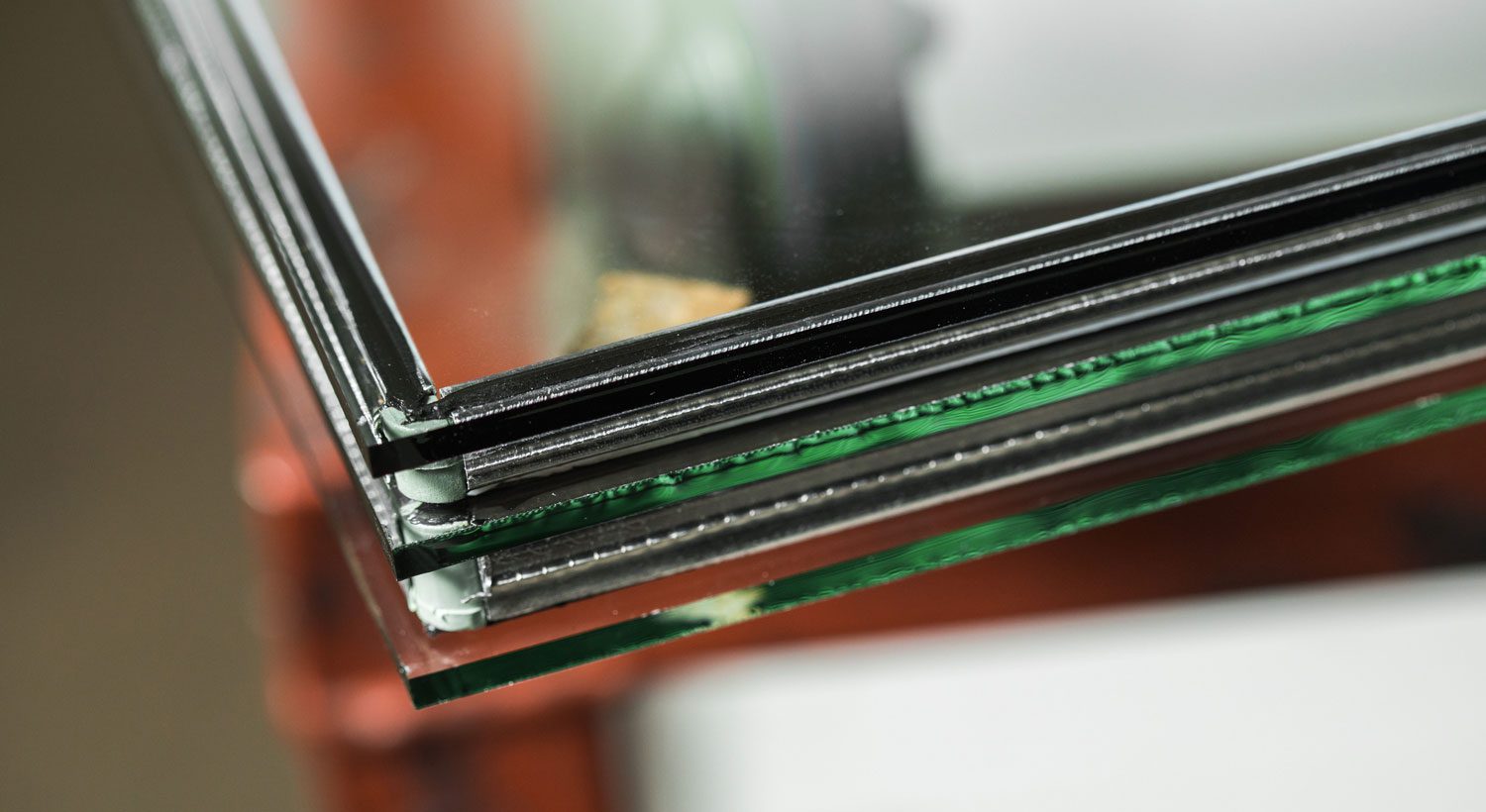
Each subtle wave, ripple, or curvature in architectural glass is a signature of transformation: from sand to surface, from heat to clarity. These micro-expressions tell the story of craft meeting performance.
In the ultra-luxury sector — from bespoke residences to quiet hospitality — distortion has evolved from an irritant to an insight: a visual record of precision pushed to its natural boundary.
Conclusion: Designing with Reality
In a world of mirror-finished façades and increasingly reflective envelopes, the architect’s role — and that of their fenestration partner — is not to eliminate imperfection, but to interpret it.
At Dynamic Fenestration, this philosophy is called Design Translation: the art of converting aesthetic vision into buildable, high-performance reality. Our Navigators collaborate with design teams at the front end of the process — modeling reflective behavior, managing client expectations, and aligning fabrication parameters with architectural intent.
Because in the end, glass does not distort — it reveals. It reveals the physics of heat, the tension between purity and performance, and the precision of those who understand both.
Architectural truth lives not in the absence of distortion, but in the mastery of it.
Summary
Distortion in architectural glass is an inherent outcome of the tempering process—an unavoidable expression of heat, pressure, and craftsmanship that becomes more visible as coatings and performance standards advance. Rather than viewing it as a flaw, the experts at Dynamic Fenestration are reframing distortion as a design reality to be anticipated, modeled, and mastered—transforming material limitation into architectural truth.