


Designing Toward Invisibility: Achieving Minimal Sightlines in High-Performance Architecture
In modern high-craftsmanship architecture, minimal sightlines are no longer a stylistic preference—they are a technical ambition. Architects pursuing near-invisible envelopes must reconcile extreme transparency with the unyielding realities of climate, seismic performance, energy codes, and constructability.
In order to explain how this balance can be achieved in reality, we explore a recent collaboration between Dynamic Fenestration and Walton Architecture on the Fallen Leaf Residence in Martis Camp, California. This unique project offers a rigorous case study in how design intent, engineering, and fenestration strategy can be aligned from the outset to accomplish phenomenal results.
Fallen Leaf demonstrates how “disappearing architecture” is not the result of thin frames alone, but of deeply integrated collaboration across disciplines—especially between architect, builder, and fenestration partner.
Minimal Sightlines as an Architectural Problem—Not a Product Feature
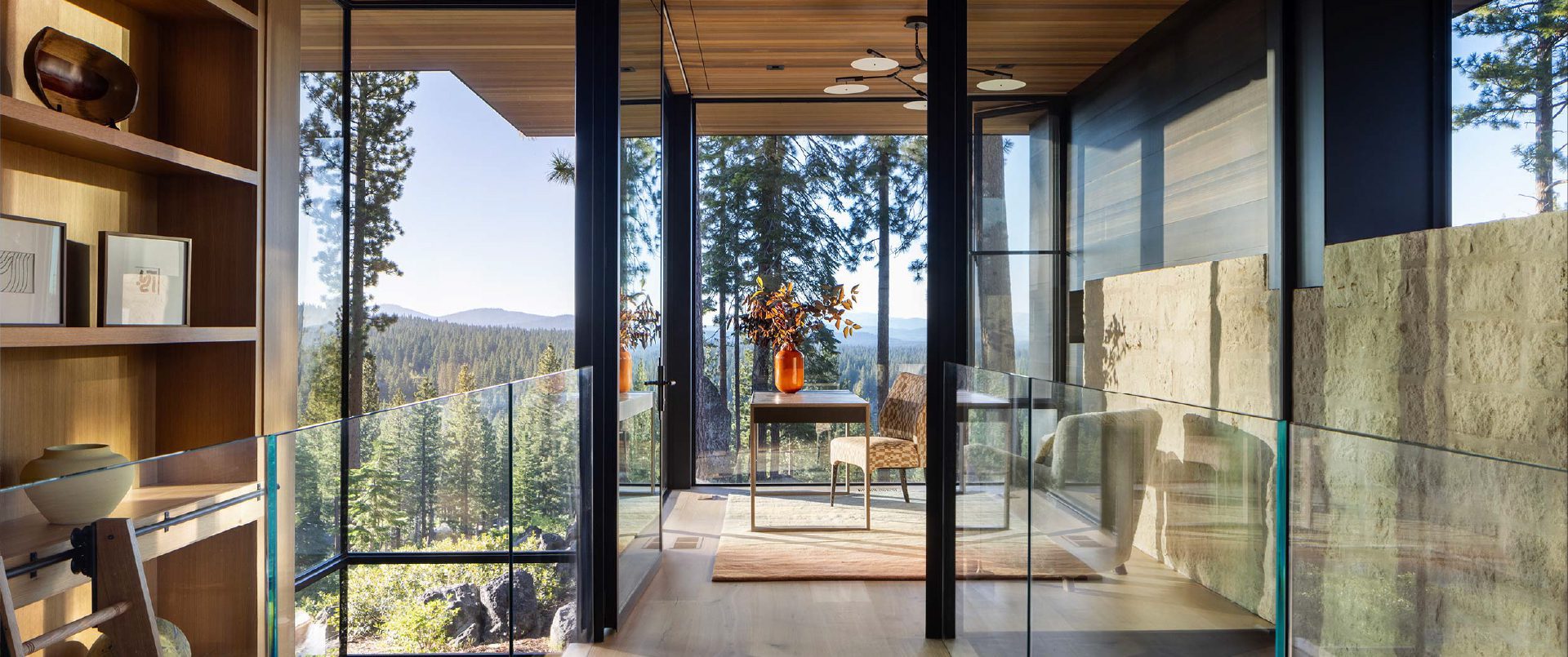
Set on a wooded, stone-studded mountainside overlooking Lake Tahoe, the Fallen Leaf Residence was conceived as an immersive extension of its site. Principal Architect Clare Walton envisioned a structure that recedes visually, allowing landscape, light, and spatial continuity to dominate the experience.
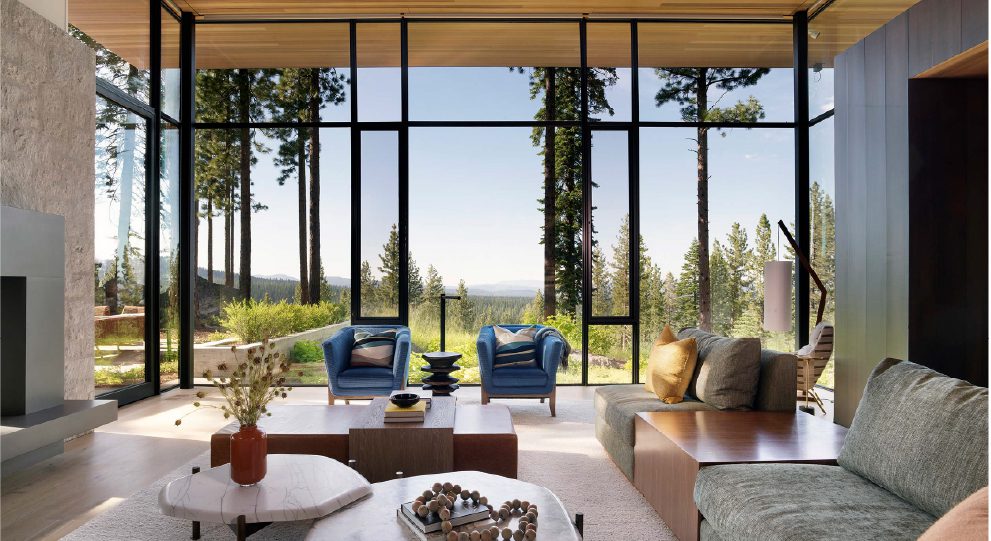
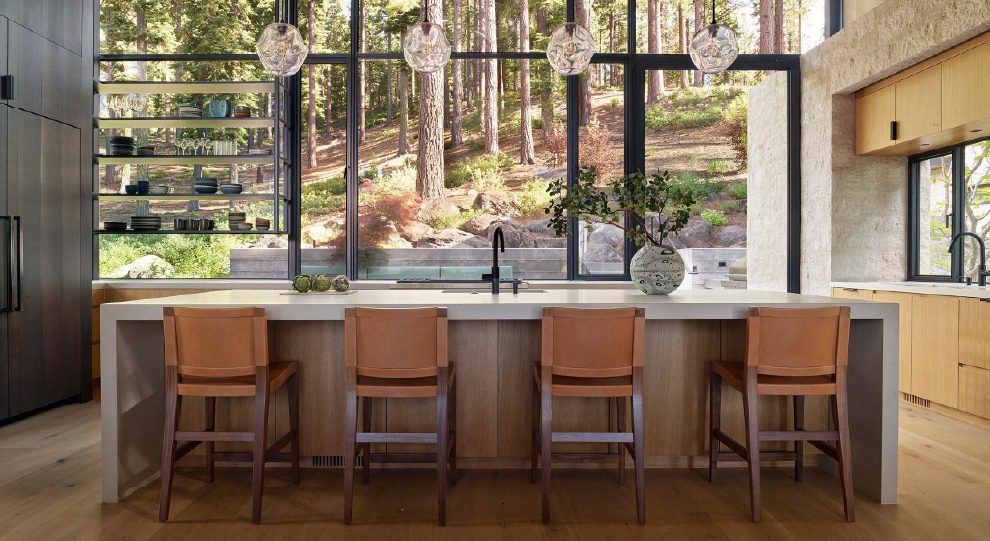
This ambition translated into a radical design decision: approximately 70% of the building envelope is glass. Walls are perceived as windows; roof planes appear to float above continuous glazing; interior spaces visually overlap through transparent partitions. In effect, fenestration became the primary architectural medium.
Yet in a high-altitude, high-wind, seismic zone with strict California energy codes and heavy snow loads, such transparency introduced immediate technical tension. Minimal sightlines, in this context, were not aesthetic abstractions—they were engineering liabilities unless rigorously resolved.
Climate, Codes, and the Tahoe Constraint Set
At roughly 6,500 feet above sea level, the site imposed simultaneous demands:
- Large temperature swings
- High wind exposure
- Significant snow loads
- Seismic vulnerability
Each factor compounded envelope pressure. For Walton Architecture and Loverde Builders, this meant that glazing strategy could not be separated from structural and permitting logic. Fenestration systems had to satisfy low U-values, seismic drift requirements, and constructability constraints—without thickening frames or fragmenting glass planes.
This is where early technical navigation became critical.

System Selection: When Performance Enables Aesthetics
To achieve the desired visual purity, Walton Architecture specified Dynamic Fenestration’s Arte Aluminum Series, a thermally broken, fully welded metal system engineered specifically for the project’s load, size, and energy requirements.
Key attributes that supported the architectural intent included:
- Narrow, welded aluminum profiles that minimized visual obstruction
- Thermal break engineering capable of meeting energy performance targets despite expansive glazing
- Design flexibility to accommodate oversized units, butt-glazed corners, and continuous glass walls
As Walton noted, Dynamic stood apart not simply for aesthetics, but because it was the only manufacturer under consideration that could deliver both minimal framing and verified performance within the regulatory framework.
This distinction mattered. In high-design projects, the failure point is rarely appearance—it is compliance.
Large-Scale Glass and the Reality of Construction
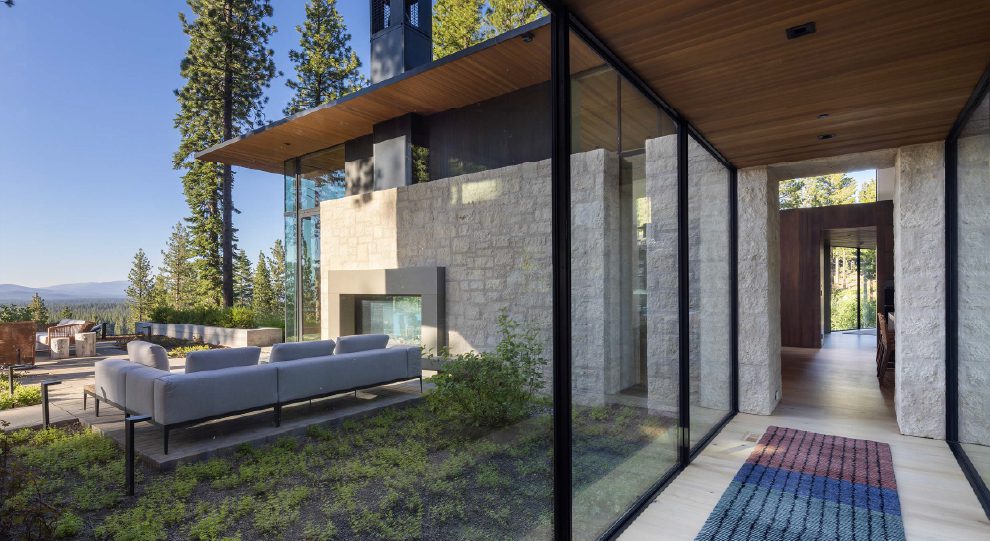
From the builder’s perspective, the design pushed boundaries immediately. Window walls reaching 40–50 feet in length, on a site with limited seasonal access, required exceptional coordination. Many units were so large they had to be fabricated and assembled on site, involving cranes, suction systems, and extended installation sequencing.
Yet complexity alone does not define success. What differentiated this project was the depth of collaboration:
- Fenestration input during schematic design—not after documentation
- Highly detailed shop drawings, often five or more pages per opening, supplemented by additional detail sheets
- Direct, ongoing communication between architect, builder, and Dynamic’s technical team
As Loverde Builders’ Brian Parker described it: “Less is more—but it’s not easy to get less.”
Minimalism, here, demanded more documentation, not less.
Seismic Drift: Designing for Movement, Not Just Strength
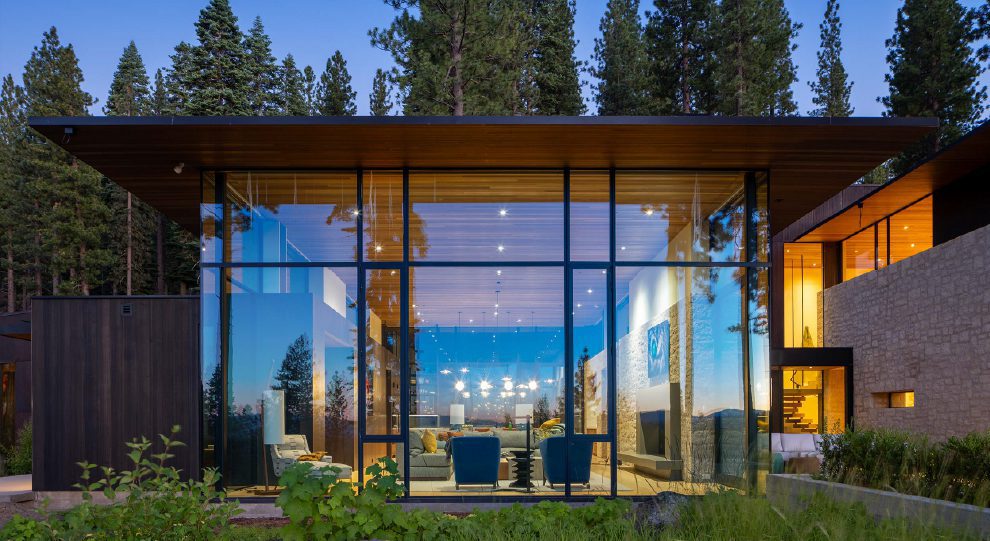
One of the most critical late-stage challenges involved seismic drift accommodation. The expansive glazing assemblies needed to behave as independent, free-moving units, allowing controlled movement during seismic events without glass failure.
This required rethinking reveal detailing and tolerance strategies close to production—a moment that often derails projects.
Instead, Walton Architecture’s engineering team, Dynamic’s technical leads, and a California-based seismic specialist collaborated to resolve the issue without compromising sightlines or delaying fabrication.
This episode underscored a key lesson: Minimal sightlines are only viable when systems are designed for movement, not rigidity.
Design-Assist in Practice
The collaborative relationship between Dynamic and Walton exhibited the design-assist model in the following ways:
- Early schematic discussions focused on intent, not just dimensions
- Fenestration was treated as part of the architectural envelope strategy, not a late-stage package
- The Dynamic team actively interpreted design intent and translated it into buildable detail
Architect David Scott, who led construction administration for Walton Architecture, emphasized the clarity this approach brought: questions were resolved quickly, shop drawings were legible and complete, and revisions were addressed without friction.
In projects where fenestration defines the architecture, this level of engagement is no longer optional—it is risk mitigation.

Beyond the Residence: Broader Lessons Learned
While the Fallen Leaf Residence is a private home, its lessons extend directly to quiet luxury hospitality, branded residences, and destination-driven architecture worldwide:
- Minimal sightlines are a systems challenge
They require integration across structure, energy modeling, seismic logic, and fabrication. - Early fenestration engagement preserves design intent
Waiting until construction documents invites compromise. - Transparency amplifies risk—and reward
When successful, it creates emotional resonance. When mishandled, it exposes every weakness in the envelope. - The process is as critical as the product
Documentation, communication, and responsiveness are what allow extreme design to survive reality.
Conclusion: Making Architecture That Nearly Disappears
A project like The Fallen Leaf Residence succeeds not because it hides architecture, but because it resolves complexity so thoroughly that architecture recedes in experience. What remains is light, landscape, and spatial continuity—supported quietly by engineering rigor and collaborative discipline.
For those who collaborate well on such projects, it becomes clear that the ability to stand behind both the design and the process is the true measure of success. For architects pursuing minimal sightlines in demanding contexts, the truth becomes evident: Invisibility is not achieved by subtraction alone—but by alignment.